Showing posts with label layers. Show all posts

Wednesday, August 25, 2010

Expanding Experience

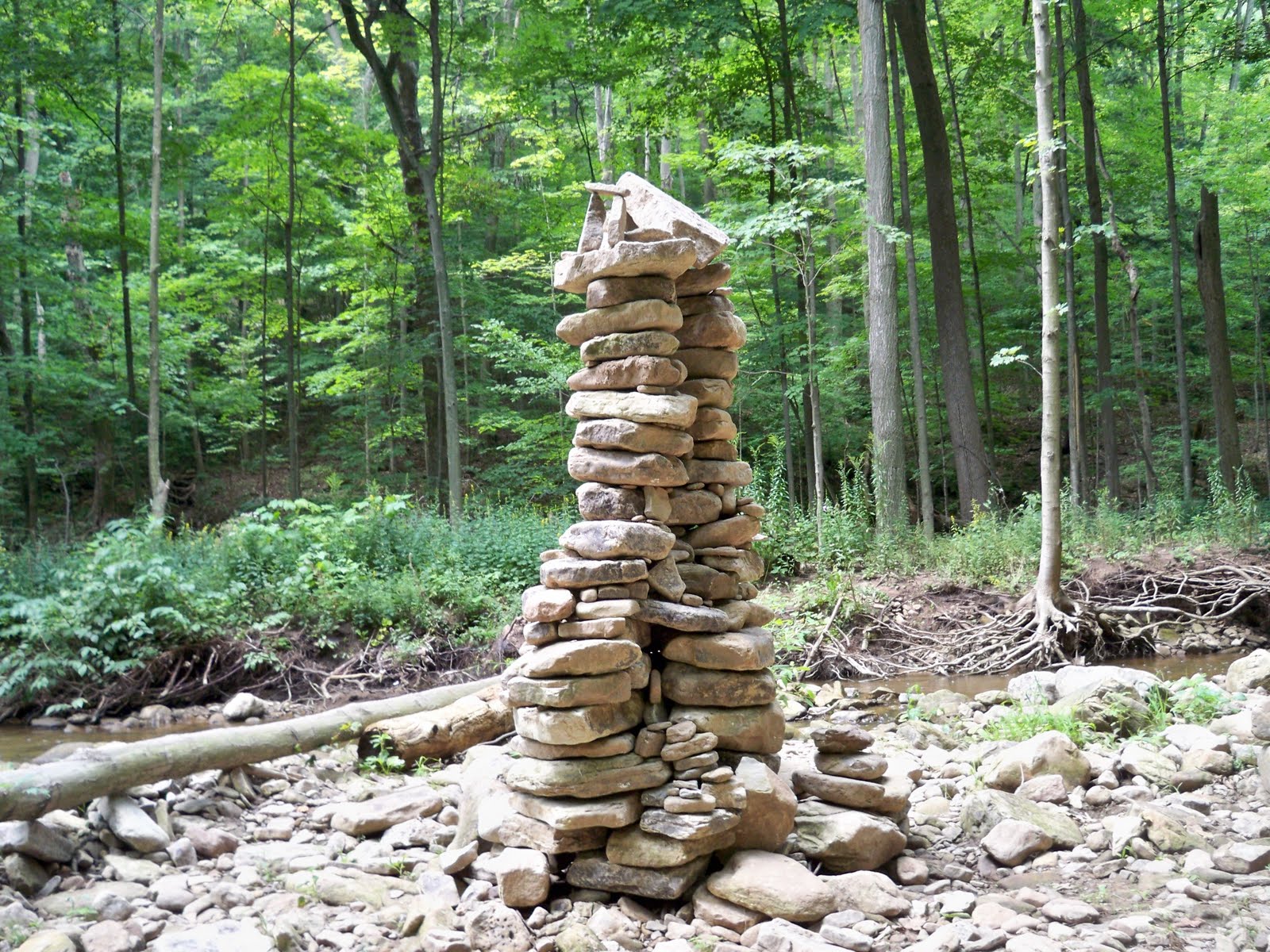
One of the things I do when I write a poem is to take a small image, something that impresses, that catches my attention with the emotional response it calls forth, and expand on it. Not always. Often the image that touches my perception can stand on its own and becomes a haiku. If it elicits one specific response, it will often become a tanka. But for a more expansive poem, the initial experience becomes the beginning of something else, something greater. Building a poem becomes an act reminiscent of constructing a cairn.

It’s not that the first impression has little or no intrinsic value. What happens is that I make connections to other events and emotions, and feel the need to bring them together. Often the first attempts will sound and feel over-sentimental, like a juvenile diary entry. Like building a cairn, shaping a poem takes time and effort.

Let me illustrate with an example – no, not the finished poem itself, but the layer-by-layer construction of it.
Sometime ago I was driving through wooded farmland on one of the four-lane divided highways toward sundown when I spotted some deer drinking from a creek several hundred meters away. Several factors impressed that sight in my mind: the evening light, the distance, the contrast of the natural (creek, deer, woods) and the constructed (highway, automobile, rushing humans), as well as my inability to stop and become a small part of that scene even though I wanted to do so.

Over the next few days that image would not leave me. It became connected to several other things. I was reminded of the creek on the farm where I grew up. I remembered also seeing and tracking deer in that area when I was young. The flowing water reminded me of a young lady I knew who loved to walk beside flowing water and stop to sit with her feet in the flowing water as a way to relax.

All these items came together in one unit, like different shaped stones in a cairn. Had the young lady, while sitting with feet in the running water of a creek, ever been surprised by deer coming to drink? She would be careful not to disturb them. Would she envy their freedom? I remembered that she now lived in a small city, married to a long-distance trucker. I wondered at the emotion she would feel, left alone so long so often. Would she go looking for flowing water to soothe her spirit? Would she remember the deer (the ones only my imagination provided)? Would she wonder if the deer remembered her?
So you see how the glimpse of deer drinking at sundown becomes a totally different thing, with the initial image remaining as a corner stone for the whole construct. My own emotional reactions, even my rational reaction, play only a secondary role to the imagined emotions of a young lady who is not part of the original.

And all that, as poetry, is as valid and real as deer beside a creek beside a highway.

Monday, July 26, 2010

Multidiscipline Improvisation


It was not just another Saturday night at the ArtwordArtbar. This Saturday night was special. No musical act had been lined up and since the venue is inclined toward all the arts (and with the availability of some of the guests at this time) the proprietors decided to hold a multidiscipline improvisation evening.

They had done something of the sort before: dance, some music, video projection on a screen behind the dancer. This session was intended to be expanded. An artist who created and layered sound and music on his laptop computer was available and eager. A new projection program needed to be tried in a more public situation. Several dancers and various musicians were ready to take part. And to this mix I suggested myself.

What I wanted to do was something I had tried before, a good number of years before. I wanted to place some of my poetry before an audience ― with enhancements not of my own making. Back in the eighties I had come together with a saxophonist and a male dancer; we had begun work on a suite combining words – music – movement to explore a primitive understanding of the world. Although the concept was never fully fleshed out for anything like public presentation, the urge to see my work interpreted by other artists has always remained in the back of my mind. Here, I believed, was the chance to do something similar. I would speak my words. My voice would stand alone without my usual stage presence and physical movement. Instead the flow of words would be interpreted instantly and without prior consultation by a dancer or dancers there on the stage.

My idea was welcomed. I would present two poems, one in each set, and then be obligated to take part in a free, unstructured performance of all the artists involved.

I decided that the first poem would be just myself and the dancers, three ladies. I wanted to recite from off stage but they preferred me onstage as they moved around me. I compromised, sitting on the front of the stage with my words and microphone, presenting the poem as they moved and controlled the open space before me while the projectionist worked her magic on the screen behind us. At the break between sets we discussed the presentation. My difficulty had been that I was not able to see their movement and use that to vary the pacing and tone; one of the dancers expressed a slight frustration that sometimes my presentation didn’t match what she expected from the words. All valid and useful comments.


My second presentation was not as concrete in imagery, leaving it more open to interpretation. I also asked the musicians ― bass, percussion, violin, and the aforementioned computer keyboardist ― to come in wherever they felt they could. This time, I stayed off-stage and was able to watch the dancers, vary the pace and intonation; the musicians were doing the same. This ensemble seemed to work together well, not flawlessly but to the satisfaction of the whole group.

Then, to end the evening after another break for refreshing mind and body, the improvisational “free-for-all.” The focus of this extensive … I suppose you could call it a “jam” … was the dancers on stage: as individuals, in twos, as a trio. To their actions each of the other artist/participants added their own layer, using their own medium. As a poet, I am not able to compose and speak out on the spot but I did not withdraw from the fusion. I used the opportunity to add voiced sounds ― sometimes words, phrases, short sentences, but more often hums or unstructured voice. I would take a clear vowel and slowly run it through different shapes of the mouth or flit it back and forth. Throw in a few do-wop phrasings (often at greatly reduced rhythms) and I knew I was contributing to the whole, even wordlessly.

Ah, the magic! Layers of creative expression, unrehearsed and spontaneous.
I look forward to the next time I can be part of such an experience.


Saturday, March 7, 2009

Meaning and Poetry (2)

We've looked at the meaning of poetry as it is carried in the language and the ways that it is used. But that's just the outside, the wrapping paper and the packaging of a poem. In the way you can see different layers of rock in the face of a cliff, a poem consists of different layers of meaning.
Most words and phrases have taken to themselves extended and inclusive meanings. A poet, when using them should be aware of the possibilities that such connotations also bring to the poem. A sea, when it is a "sea of troubles," is no longer a body of salt water; in deep blue sea we need to consider, probably by context, whether deep refers to "blue" or "sea." And this is just one level. Is the blue sea also a sea of blues, therefore a sea of troubles? That's another possibility. Then, like a dream, can it convey longing for distant places, a force limiting expansion of the soul, and so on and so on. All these layers of meaning, whether close to the surface or not, have a presence in a poem.
So a poet must be careful not to distort his clarity of expression by using words and phrases that carry meanings contradictory to what he intends. He must know and understand as much of the possibilities his words may create, what nuances lie hidden among the similes, or how his metaphor may be interpreted.
Even then, the poet should not be surprised if someone ascribes to his work a totally subjective meaning or interpretation. The wash of language can validate almost any meaning. The surrealists taught us that.