Showing posts with label memory. Show all posts

Wednesday, August 25, 2010

Expanding Experience

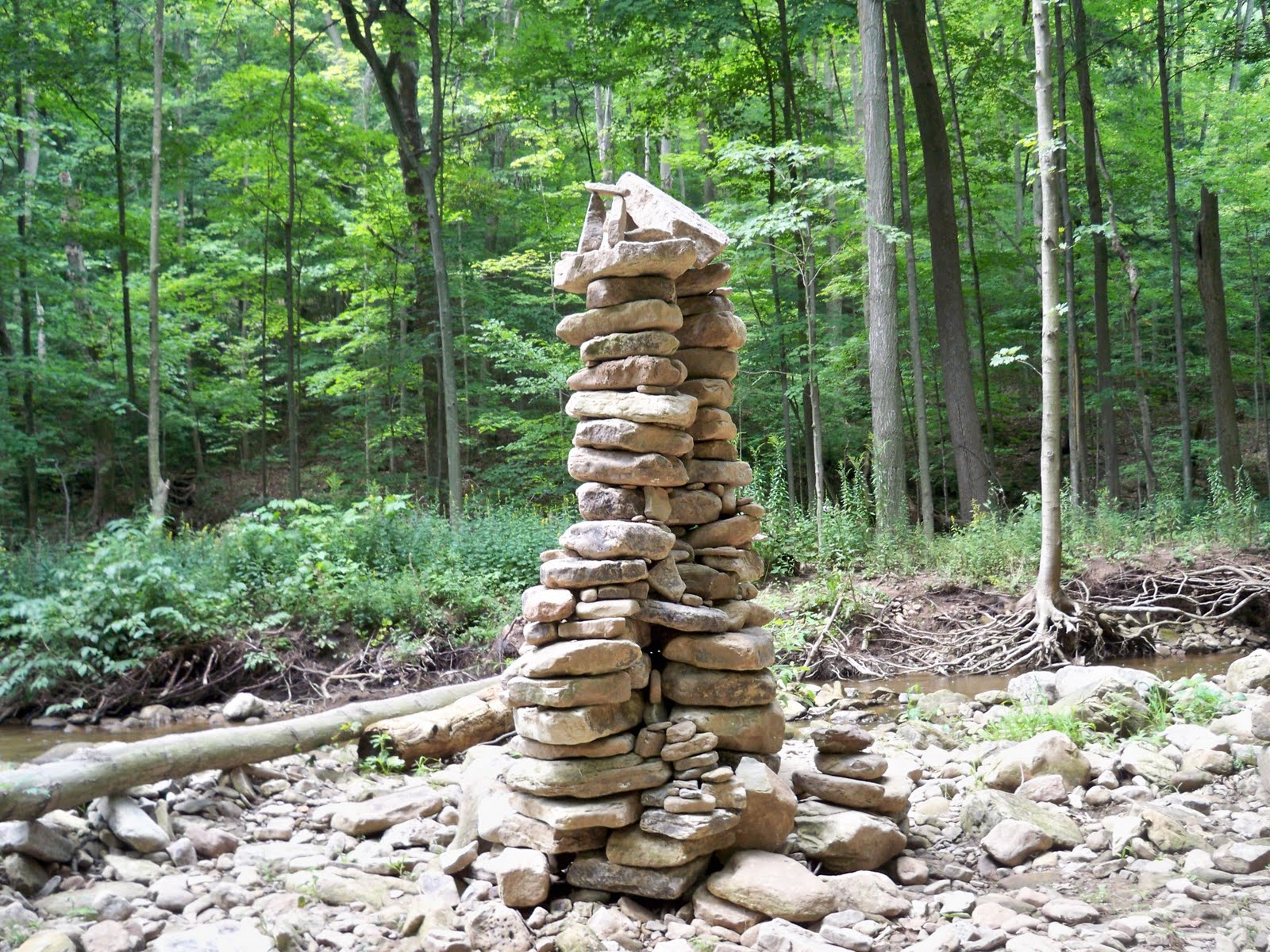
One of the things I do when I write a poem is to take a small image, something that impresses, that catches my attention with the emotional response it calls forth, and expand on it. Not always. Often the image that touches my perception can stand on its own and becomes a haiku. If it elicits one specific response, it will often become a tanka. But for a more expansive poem, the initial experience becomes the beginning of something else, something greater. Building a poem becomes an act reminiscent of constructing a cairn.

It’s not that the first impression has little or no intrinsic value. What happens is that I make connections to other events and emotions, and feel the need to bring them together. Often the first attempts will sound and feel over-sentimental, like a juvenile diary entry. Like building a cairn, shaping a poem takes time and effort.

Let me illustrate with an example – no, not the finished poem itself, but the layer-by-layer construction of it.
Sometime ago I was driving through wooded farmland on one of the four-lane divided highways toward sundown when I spotted some deer drinking from a creek several hundred meters away. Several factors impressed that sight in my mind: the evening light, the distance, the contrast of the natural (creek, deer, woods) and the constructed (highway, automobile, rushing humans), as well as my inability to stop and become a small part of that scene even though I wanted to do so.

Over the next few days that image would not leave me. It became connected to several other things. I was reminded of the creek on the farm where I grew up. I remembered also seeing and tracking deer in that area when I was young. The flowing water reminded me of a young lady I knew who loved to walk beside flowing water and stop to sit with her feet in the flowing water as a way to relax.

All these items came together in one unit, like different shaped stones in a cairn. Had the young lady, while sitting with feet in the running water of a creek, ever been surprised by deer coming to drink? She would be careful not to disturb them. Would she envy their freedom? I remembered that she now lived in a small city, married to a long-distance trucker. I wondered at the emotion she would feel, left alone so long so often. Would she go looking for flowing water to soothe her spirit? Would she remember the deer (the ones only my imagination provided)? Would she wonder if the deer remembered her?
So you see how the glimpse of deer drinking at sundown becomes a totally different thing, with the initial image remaining as a corner stone for the whole construct. My own emotional reactions, even my rational reaction, play only a secondary role to the imagined emotions of a young lady who is not part of the original.

And all that, as poetry, is as valid and real as deer beside a creek beside a highway.

Wednesday, March 17, 2010

Words and Music, Certainly

I have come to understand that the music that moves me is usually associated with language. That is to say, a composition consisting of musical notes and depending on that alone does not touch me as deeply as a well-phrased song. I am trying to understand why.


This meditation comes out of a concert I attended recently, and the comparison I make with different concerts I remember. I can listen to classical compositions and enjoy the sound patterns, perhaps even feel a vague emotional response to it. I can follow the intricacies of a jazz number and be astounded by the separate reality it may portray to the contemplating mind. But it is songs that I remember most vividly. Not necessarily the poetry of the song although that seems to be a strong component. It is the combination of words and music that touches me deepest


The concert by Big Rude Jake about ten days ago is a good illustration. I had seen him fronting a neo-swing type band about eight or so years ago but heard that he had refined his sound to more of a singer-songwriter style presentation. I enjoyed it even though I approached it somewhat skeptically. I tried to analyze what it was about his concert that impressed me and came up with these facets: he had the poetic sensibility of a Tom Waits, the musical ambiance of a Leon Redbone, and the ‘fun’ jazz styling of Big Rude Jake. I was moved and impressed.

But several days later I came across a phrase that, although here it was in a totally different context, reminded me of a song that had moved me to tears many years ago. I pawed through my extensive record collection and found the original recording. When I played it again for myself, the tears flowed again. And again, every time I played it or sang it to myself. This is one of a small number of songs that affect me that way. With each one, I can remember where I first heard it, with whom, under what circumstances. I cannot say the same about any other piece of music that has no vocal component.

So it seems my true appreciation of music depends on language. I don’t know if this is unusual, whether it is a part of my being a poet, a wordwright or something like that. The realization that such is my nature does help me understand myself.

It helps explain my affinity to old blues, story songs, and music surrounding literate imagery.


Sunday, November 29, 2009

Poet / Storyteller


The other evening I went out to hear Charlie Chiarelli perform. He's an actor, musician, and storyteller who made his name telling stories about his immigrant Sicilian boyhood here in Hamilton. He's no longer working the Canadian-Sicilian bit but was trying out a new direction. I enjoyed it; it suits him.
He is taking stories (plots) from Boccacio's Decameron and using them to tell today's stories. In itself, this is nothing new; Shakespeare too borrowed freely from Boccacio. The surprising thing is that the stories, transposed into today's language and imagery, come across very well. It may be true that, as I've been told, there are only a small number of possible basic plots: the rest is details and embellishments. In Charlie's hands (and mind, and mouth) the embellishments made the stories.
The twist came when our host introduced him as "the poet of the North End" and at first I went "Humphf, a poet? Not likely." But I began thinking. The main function of the bard, the skal, the scop, the poet in the beginning was to remember and tell the stories of the tribe. The storyteller continues that tradition perhaps even more so than the poet.
Now that poetry has given in to self-indulgent introspections and explorations of emotion and experience, who is left to tell us about things, and other people, and far away places? Even the singer/balladeer has become self-involved. The popular media is so skewed that much of it is irrational flim-flam, an entertainment for the masses. So who will tell the story about Jake down the street or what happened to Betty last week? The mantle seems to have been passed to the storyteller, the one who can keep it straight and simple the way the poets and the singers used to.
It's probably a good thing that many of our immigrants come from places and cultures that still honour the storyteller. Without such "new" blood our records of the simple parts of our lives could become as distorted as soap operas. Who will record the true story of Colvin's Brave Stand? Not one song will be recorded, not one poem published. But sometime down the road a storyteller will say, "Once there was ... "
Poets, in a time of unrest and injustice we need to do more than bemoan the times. We need to lead by example; we need to keep and tell the stories of ordinary people.


Tuesday, April 21, 2009

Al Purdy Day, April 21

It's "Al Pudy Day" in Canada, and the league of Canadian poets suggests parties to celebrate the great poet. I'm not much of a party animal but I have been thinking of him throughout the day, leafing through his books, reading his poems. I decided I should write an entry for this space; then decided to publish here a posthumus letter I wrote to him. It's a summary of a presentation I did for last year's "Pudy Fest" in Marmora.
Hey Al,

I never knew how much your presence in my life meant to me until I was left holding your absence. Like they say, “You don’t know what you’ve got till it’s gone.” Now you’re gone, I felt I had to inspect this poet I call myself, and look closely at the way you helped shape me.

Remember Yorkville in the sixties? With my developing thirst for poetry I was hanging out there with a bunch of out-of-towners. The others looked for folk musicians; I looked for poets. And found them.

They didn’t congregate in the Yorkville and Avenue Road clubs, they hung out at the Bohemian Embassy in an alley off Yonge. It was not only a place for musicians, it was the haunt for writers, actors, poets. One evening one of the featured readers was this Al Purdy who had won the Governor-General’s prize for poetry. When you read, I was spellbound.

You reminded me of the Beat poets I had heard in the States, rough and uncouth in appearance with the sounds of everyday words coming from your mouth. And I suddenly realized that to express myself in poetry, I didn’t need flowery language and classical allusions to gods and muses. Carefully crafting common language made your poetry feel and sound natural. I approached you afterward, got you to sign a copy of a book. I told you my name but you never spoke it.

The next time we met face to face was over dinner ― for ten. I had persuaded the local Arts Council that a reading by the great Canadian poet Al Purdy would be a wonderful way to end a week of literary celebrations, and now I was plunked among the artistic movers and shakers in a fancy restaurant. I don’t remember the dinner conversation. I remember little of the reading you did.

I did, however, come away with a concept that has stuck in my mind ever since, always connected to your words at that time. Over dinner and during the reading, you emphasized how poetry and individual poems build community: in exploring common experience they build an intrinsic, common bond that is easily recognized.

Through the years there were several of your readings and other gatherings I attended. Only one really stands out, again here in Hamilton, and that because you brought home to me another simple but vital concept.

Poetry is truth, you claimed. No, not the legal, factual definition of truth. Its strength lies in its ability to connect, to connect over distance and across time. It holds the truth that is not “out there” but inside everyone. That wasn’t the way you expressed it. I don’t remember your words, not even an approximation, but that is the lesson I retain.

Three very important and fundamental concepts for this poet’s development, and for this I thank you, Al. I never got the chance to do so in person. We never got that close.

Our paths crossed several times over the years and one small thing keeps irritating me. You never gave any indication that you recognized me or knew my name. Will you do me a favour?

The next time we meet, greet me by name.

With gratitude and respect,

Jefferson

And it's not just me; in some way or other he influenced most of the poets who followed him. He has become an icon in Canadian letters, but remains so human, so much a poet of the people and the voice of this land.

Sunday, April 12, 2009

The Ballad: Poem and Music

In those days when we relied on word of mouth to transmit stories about our forefathers, the bard played an important part in daily and ceremonial life. He was the one who remembered and repeated the old stories. But as with all customs, things change. By the time of the middle ages we had court troubadours and minstrels who would wander, all trying to maintain themselves with their words and often with musical accompaniment. The stories they recited or sang were no longer the great epics of heroic deeds or the passions of the noble classes. Instead, the poet/performers turned to everyday concerns that were familiar to the common people, that were a part of their lives. The story poem or ballad, with or without music, became an important part of our language and literature. With it came a form, a simple method of construction, that is still very much in use today.

The story-poems as delivered were usually about happenings some distance away in time or place; they usually dealt with unknown people. Because they were not written, the facts and contexts often changed in the telling, until it no longer mattered exactly how and why the story/song-poem began its existence. A good example of this lies in the stories of Robin Hood. Some of the oldest written copies of ballads we have are about him. They seem to be based on and to incorporate parts of much older material. Still, the stories continue to be told and sung.

The attributes that made the ballad so versatile continued into the period of greater use of written language. Probably the most important was its form. The ballad was usually arranged in four-line rhymed stanzas; there is such variety in this form that it seems to become a natural pattern for poetry and one which is not difficult to master and employ.


The ballad stanza usually consists of four lines: the first and third are tetrameter (four feet) while the second and fourth are trimeter (three feet); the rhyme scheme is often a b a b. It would read:

a-dum, a-dum, a-dum, a-day,

a-dum, a-dum, a-do.

a-dum, a-dum, a-dum, a-day,

a-dum, a-dum, a-do.


This simple stanza can be easily and effectively changed. The quatrain can become four equal lines. The rhyme scheme can be changed in several ways, e.g. by not rhyming lines one and three. Or two and three can be rhymed to become a rhyming couplet between the lines of another couplet. Several other variations are easily formed. An extra line can be added. All this with a simple, four line formation, the ballad stanza. Coleridge used it in his Rime of the Ancient Mariner; Tennyson effectively makes it the basis of his In Memoriam; Oscar Wilde deftly uses it to condemn the penal system in The Ballad of Reading Gaol.


But about this time it becomes the foundation of another manner of expression. Poetry begins to move away from the strictures of the formal stanza. Because it has such musical and rhythmic characteristics and harks back to the ballads of the minstrels and the songs of the common folk, songs, and especially folk songs in America, use the form extensively. When used to tell stories in country music the ballad stanza is powerful.There is certainly no reason why a poet should not write in the "common measure" of the ballad stanza. In fact it should be an integral part of his knowledge and experience before he attempts to write "free verse." Without a deep understanding of rhythm and rhyme, structure and form, his writing so often becomes "free" without any hint of verse. And that can be a great loss.

Saturday, April 4, 2009

To the Beat of the Beats

Last night I attended the fiction authors' readings put on by gritLIT, Hamilton's literary festival under way this evening. Two of the novelists, with whose work I am acquainted, didn't surprise. The third author Ray Robertson, whom I hadn't read before, did.

Part of the subject matter of his novel What Happened Later is a trip by Jack Kerouac to Quebec in 1967 to explore his own background. Sick and alcoholic, he persuades a friend to drive him to Canada, to go "on the road" one last time. This journey is offset with a boy's first discovery and search for Kerouac. The two contrast each other throughout the book. (Young Ray. a decade or more later, knows the author is no longer alive; it is not a quest for the person.)

The subject in itself could have held my interest. I am a long time admirer of the so-called Beats, especially the poetry of Ginsberg, Snyder, Corso, Ferlinghetti, McClure, and of course Kerouac himself, since I first read and heard them in the early sixties. Aside from language and subject matter, I was struck by their use of the rhythms and improvisations thereof that I was discovering in jazz at the same time. They wrote and read in beats and breaths, cadences I could follow and fix and hear when they were long gone. Whenever I opened a work to read for myself those cadences resounded through my mind.


Imagine my surprise when Robertson began to read from his book. No, that wasn't Kerouac's voice. I know it. I have in my collection nearly all of his recorded work. But the tone and the cadences were almost, to my ears, indistinguishable from the best and most satisfying of Kerouac's writing. Here was someone who had absorbed his subject and in some way assimilated and now expressed him.
That kinetic, pent-up energy was there, coiled as if barely controlled. The music of a bebop jazz group hummed around my ears. The stacatto bursts of words whipped around the room. And I sat there with my metaphorical mouth wide open in amazement.

I sat through the rest of the program, waiting to purchase the book to take home to discover if that magic was really there. Believe me, it is.

Sunday, December 28, 2008

Connection

I woke up this morning thinking, for some unfathomable reason, about a poem I had written many years ago called "A Proposal of Marriage." For half an hour or more I lay content in my bed, alone and undisturbed, remembering not just the words but especially the emotions that produced the words and the poem.

The way I remember it, on a morning much like this I woke with my wife still curled against me, her head on my shoulder, an arm and leg reaching over my body. I marvelled at the way we fit together, not only physically but emotionally, spiritually. We each had strengths to offset the other's weaknesses: where she was hot-headed, I was cool and rational; where I was withdrawn, she was outgoing. Together we became a special entity as well as remaining the two.

We had been married well over a year, and I realized that I had never formally proposed to her. I'd asked if she wanted to marry me (in that warm time between sex and sleep) but she'd said no. After the third such (informal) request I let the question lie, but when she reopened the matter I leaped at the chance. No hesitation; no fancy words and flowers and rings and other such things: we went and got it done.
That morning, watching her sleep in the crook of my arm, I knew I had to make some sort of an effort - if not for her, certainly for me. I carefully extricated myself from her sleeping embrace and wrote an outline for a poem. I knew what I wanted: two opposing images brought to one conclusion. As usual it took a while for all the elements to fall together but they finally did.

I presented it to her on Valentine's Day. (The next option would have been her birthday, or failing that our wedding anniversary.) It was later published in a Toronto magazine and collected in my book Lunatic Hands.

Here is the poem I should have written before we married, did write after we were married, and still connects me to her and times and places.


A PROPOSAL OF MARRIAGE


Under my feet
streets and sidewalks crack
hard sunbaked clay
crumbles dry to dust


Wherever you touch
grasses flourish
myriads of wildflowers
leap toward the sun


Would you
walk in my footsteps?