Wednesday, October 27, 2010

Whooping Poetry


Recently there has been some intense discussion in certain circles about the increase in Black American churches of “whooping,” the vocal technique whereby a preacher urges for an emotional response to his sermon, and its value not only as a part of communal worship but also as a means to deliver the message. Those of a rational mind-set prefer their sermon to be delivered as lecture, reasoned point by point to a determined conclusion. Others see bringing and receiving the message as involving more than the mind, and that whatever will emphasize it is valid even if not necessary.

Whooping, as practiced by black preachers, is a rhetorical device. Most agree it should not be used to present the substance of the sermon, the message. However, some of those who practice it refer to it as the “gravy;” after delivering the meat-and-potatoes you pour on the extra, the joyful element. Others see it as a method of emphasizing, impressing in the spirit what has been given to the mind and thereby involving the whole person – often with physical responses, whether by voice or body or both.

Now what has this to do with poetry? Let me explain. I believe that poetry is as much a vocal art as singing. Before general literacy, well into the twentieth century, people experienced poetry as spoken language. I see the book, the page, as a storage and retrieval system. Even when I read silently to myself, I want to fear the words sing in my own voice. And, when poetry is publicly presented on a stage, any technique of drama or rhetoric that enhances the poem is important.

On more than one occasion my delivery, my method of presentation, has been compared to that of a preacher. And that's not a bad thing. In poetry I want to involve much more than reason. I want to invoke an emotional response, even a spiritual one if you will. The greater the audience involvement is, the more the poem is poetry.

I admire the cadence structures used by black preachers to enhance their sermons. I may take a look at my own delivery of certain poems to see if such a (deliberate) stucture can work for them.


Saturday, October 16, 2010

Another Grammar Rant


Sometimes small things irritate me.
Right now, I have just finished reading a very good short story. It held my interest in the plot and characters and their development but ... Several times the writer used the verb 'to lay' when he should have used 'to lie.' No great matter, you might say, people make mistakes. True enough, but this was the same mistake over again. Several times.

I admit to my own faults and quirks, but I usually catch them when I reread a raw manuscript. Before publication, an editor or proof reader should catch them. Or are line editors and proof readers extinct, wiped out by Spellcheck and the like?

The difference (with exceptions, of course. After all, this is the English language.) is that 'lay' is a transitive verb, 'lie' is intransitive. In other words, 'lay' means something is being done to something else. Action. 'Lie' refers to a passive state of being. No action. The only thing they have in common is that the simple past tense of 'lie' is 'lay' which is the present tense of the verb 'to lay.' In a small example: "I lay the book down. (Action, now.) It lay on the floor before I found it. (No action, and in the near past.)

Somewhere in my first few years of dealing with our language, I realized the difference; I've never, even in conversation to my knowledge, interchanged these verbs. In conversation the misuse doesn't seem as glaring, probably because there is greater context. But printed on the page, or on a website? Very annoying.

I tell you no lie.


Friday, October 8, 2010

Changing Times, Changing Language

One of the things that struck me last month at the Labour Day parade was how the language and terminology of work and the workers has been changing. When, as a young working man, I began to involve myself in the labour movement all the words and slogans pertaining to rights and benefits that had been most identifiably the basis of the movement since the beginning of the industrial age were still current and still had the same meanings.
But now. Imagine a workers' celebration without talk of 'us' against 'them,' nothing about 'the bosses,' no reference to striking for increased wages, better conditions, shorter hours, increased benefits. The only recognizable sloganeering is about pension rights, not so much demanding the workers' rights to a pension but crying out against the international conglomerates' ability to erode pension benefits almost at will. That's not imagination, that was the reality. Joe Hill should be raging in his grave.
But when our concept of work changes, as it does more and more, so must the language change. When work was considered as physical labour, the time spent doing so was important to a person's physical well-being. Now such activity is becoming less and less a part of our culture.
A person who spends an inordinate amount of time at his job is no longer considered a 'slave' but more likely a 'workaholic,' one who chooses to spend more time at work for whatever reason. Bosses and employers have become faceless entities without any presence against which to direct protests. And so the workers' language must change.
The real force for change and workers' protection must necessarily be one of revolution. The problem seems to be that the work force has been fragmented. There are no longer thousands of people working together in one place who can unite into a single entity. A lot of the work done for a large corporation is handled by a few persons operating machinery or computers; much of it is outsourced to small businesses or individuals under contract. The old terminology no longer applies.
A revolution that cannot gather together like-minded people in one place needs to be fuelled by language. The possibility of pamphleteering still exists but a far greater force would seem to be the newer electronic media. It has already started with petitions using e-mail and/or facebook. The continuing growth will see new terms and language.
An example of the changes in the labour movement is happening locally. The Workers' Art and Heritage Center is sponsering a project looking for new labour songs for the new labour reality. Tonight during the monthly Art Crawl (an open house of a number of art galleries in one district) one of its proponents was seen going up and down the street pulling a cart – emblematic of the old concept of work – but singing a song dealing with the more recent concept of labour.
A post-industrial society needs to express itself using not only the age-old concept of work songs but also the post industrial media.
And an information language for this information, post-industrial world.


Wednesday, September 22, 2010

Mime, a Foundation of Language

I was listening to a linguist/anthropologist on a radio program expound on his theory that even before we humans assigned meaning to sounds and groups or sequences of sounds we were communicating by what we today consider mime. He was so animated as he spoke; I could imagine the gestures and facial expressions he must have been using to emphasize his points. Not only, he claimed (as a result of long and careful research), did we communicate with each other that way but also with different species!

And I think of how a lab environment must have been set up. First people would have been put in close proximity and told they could only communicate without using language. Of course it will work; ask any immigrant placed among people whose language is totally foreign to them. You make yourself understood by gestures. It's no great leap to conceive that such must have been the case when there was no recognizable language at all. We still use mime and mime type movements to emphasize what we say. That's known as body language.

Body language is also a large component of how we communicate with other species. Anyone who trains dogs, etc. will tell you that motion is as important as tone of voice and more so than specific words. We have been communicating with other species as long as we've been around; there is nothing new here.

Let me tell you, too, about poetry and mime, about poetry and motion. In the earliest times descriptions of activities and events must have depended on the poet/storyteller miming those acts. The great epic poems needed action to impress and deliver their meaning. The bard did not simply sit by the fire or at the table and speak; he got on his feet, proclaimed, gestured and mimed. When he spoke of the hero, he would strut, stick out his chest, raise that powerful arm. When he spoke of the defeated enemy he would make himself look weak, beaten, and slink
about.

It all holds true today. The better speaker is the one who engages you with gesture and motions as well as sound. The poet who will be heard and admired more is one who does not simply read or say his words. He must get up on his feet, raise his body and his voice to proclaim.

The language of the voice, words and sounds so intricately woven, enhanced and emphasized by mime, the language of the body.

Thursday, September 16, 2010

On The Street

Sometimes I discover little things or happenings that please me deeply. One such happened at the most recent Art Crawl here in the city, that evening when all the galleries and related businesses on James Street North open wide and party. The street fills with people, in clusters and individuals, moving from one to another to sample the art and other attractions in the area. Some galleries provide incidental music or other performance. You can find buskers on the sidewalks: musicians, dancers, and more.

Often you'll find a display of books in front of a shop. There may also be a used book dealer displaying his wares. But this most recent Art Crawl offered something dear to my heart; a young lady had positioned herself in front of a gallery and was offering poetry for sale! She was sitting on a blanket on the sidewalk, copies of her first (self-) publication spread out on display. Without even reading one poem, I bought a copy. (She said I was the first person to purchase her work; I feel proud of that!) It didn't matter if the poetry was good or bad, what mattered was that the young lady was putting her words and her craft where it belongs - out on the street with all the other arts.

It reminded me of myself, hawking copies of my own poems in Yorkville in '67-'68. (Gestetner, remember those?) And a plan that never came to fruition, of chalking poems on the sidewalks of Barton Street a number of years ago. Then there was the International Village's initiative that displayed poems monthly in storefront windows. There is the current project of Simon Frank incorporating a poem in the sidewalks of Locke Street as public art, rather than the usual mural or sculpture.

Poetry on the street. Poetry in the markets. Poetry for people where the people are.


(By the way, that book "Poetry's Dead - on Love, Despair, Hobo-ism and produce" was worth the price. Nyki Hamilton, I'd love to be in touch with you!)

Monday, September 6, 2010

Words and Music for Peace

Yesterday, the Sunday of the Labour Day holiday weekend, I took part in an exquisite experience, artists expressing their art for a cause. The cause: building a community of peace; the event: Michael Pickett's third annual "Concert for Peace" at his home in Crystal Beach, Ontario.

There was no fervent preaching, no raising money for a cause. The music Michael and friends provided and the often expressed reason for all of us being there rang out the message loud and clear: if there is ever to be world peace, it must start with the individual and grow among friends. Here we grew from music fans to friends to a community, a group who hold something in common.

Five musicians/bands performed in diverse styles, from gentle and introspective to powerful and driving. All left their marks on the common consciousness and with those marks the awareness of the need for peace within and without.

At one stage in the planning there had been some consideration that Poets for Peace might also take part in the performance, a group of which I am also a part. That idea could not be developed but that didn't matter. Sometimes poets become preachers for a cause, and that wasn't needed. The music and the communion of friends were more than enough.

I want to thank Michael and Louise Pickett, all the musicians who performed, and all the friends there, old and new. Together we were what we could not be independently.

Peace. May it live and grow through us.


Wednesday, August 25, 2010

Expanding Experience

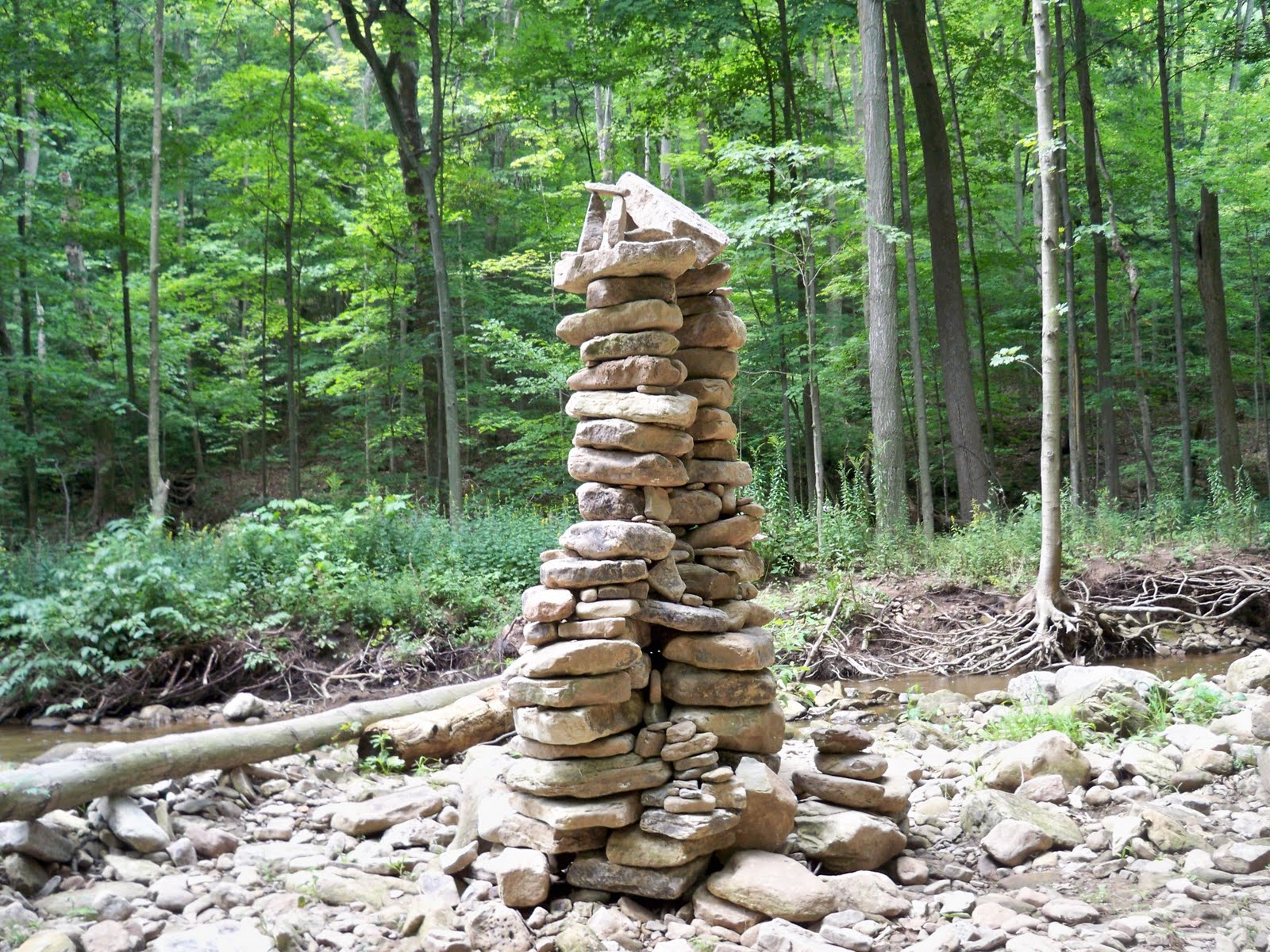
One of the things I do when I write a poem is to take a small image, something that impresses, that catches my attention with the emotional response it calls forth, and expand on it. Not always. Often the image that touches my perception can stand on its own and becomes a haiku. If it elicits one specific response, it will often become a tanka. But for a more expansive poem, the initial experience becomes the beginning of something else, something greater. Building a poem becomes an act reminiscent of constructing a cairn.

It’s not that the first impression has little or no intrinsic value. What happens is that I make connections to other events and emotions, and feel the need to bring them together. Often the first attempts will sound and feel over-sentimental, like a juvenile diary entry. Like building a cairn, shaping a poem takes time and effort.

Let me illustrate with an example – no, not the finished poem itself, but the layer-by-layer construction of it.
Sometime ago I was driving through wooded farmland on one of the four-lane divided highways toward sundown when I spotted some deer drinking from a creek several hundred meters away. Several factors impressed that sight in my mind: the evening light, the distance, the contrast of the natural (creek, deer, woods) and the constructed (highway, automobile, rushing humans), as well as my inability to stop and become a small part of that scene even though I wanted to do so.

Over the next few days that image would not leave me. It became connected to several other things. I was reminded of the creek on the farm where I grew up. I remembered also seeing and tracking deer in that area when I was young. The flowing water reminded me of a young lady I knew who loved to walk beside flowing water and stop to sit with her feet in the flowing water as a way to relax.

All these items came together in one unit, like different shaped stones in a cairn. Had the young lady, while sitting with feet in the running water of a creek, ever been surprised by deer coming to drink? She would be careful not to disturb them. Would she envy their freedom? I remembered that she now lived in a small city, married to a long-distance trucker. I wondered at the emotion she would feel, left alone so long so often. Would she go looking for flowing water to soothe her spirit? Would she remember the deer (the ones only my imagination provided)? Would she wonder if the deer remembered her?
So you see how the glimpse of deer drinking at sundown becomes a totally different thing, with the initial image remaining as a corner stone for the whole construct. My own emotional reactions, even my rational reaction, play only a secondary role to the imagined emotions of a young lady who is not part of the original.

And all that, as poetry, is as valid and real as deer beside a creek beside a highway.