Sunday, June 28, 2009

Enlightenment

Last week one day I was driving home from Burlington on Plains Road and watched a hawk land on one of the roadside light standards. It reminded me of the nearby Hendry Valley portion of the Royal Botanical Gardens, and that I hadn't been there for some time. That same afternoon I set out to the mouth of Grindstone Creek without any specific purpose.

I don't know if it was because the valley was thick with early summer growth of reeds and grasses, the combinations of heat and cool and light and shade, the sudden absence of human and mechanical interaction. I felt a growing awareness of all my surroundings and a wondrous sense of union. Let me explain.

Especially in natural settings I get a feeling of belonging, that the place and time I share with other life (and even non-life such as rock and water and air) is good, is as the Creator meant it to be. I love that feeling and take time to enjoy when it happens. But this was more. And because it was so much more, I have had to spend some time sorting this out in my head, trying to find common language to express the unusual.

Let me try to put it this way. Rather than feeling I belonged in, I felt I was.

Laugh if you must. For the merest instant I was terrified: my being didn't stop at my skin. I was the grasses and sedges around me, the water and frogs at my feet, the trees and calling birds above me. Light flowed like water, no a little more viscous like a pure light oil. The fear didn't last; it was instantly replaced by an intense joy that blocked my usual rational scrutiny.

If anyone had observed me, they might have judged me mad. I know I talked to the trees and the water. I spoke with the birds. For some time I was part of the divine that is all.

The experience is no longer fresh; I don't know if it changed me. This I do know. I have a better understanding of Francis of Assisi, the Spanish mystics, even Vincent Van Gogh. Several poets.

I felt the need to re-read poets like John Donne, Gerard Manley Hopkins, and even Allen Ginsberg's "Footnote to Howl."

It made me contemplate (again) the reason I write poetry: to instill and share the holiness of everything I see and feel, to show the miraculous in the commonplace. When I receive a comment that shows perhaps I succeeded, I feel that same joy and hope there are more who have been touched in some way by my words.

Sunday, June 21, 2009

Satisfaction

I want to get a little personal today; bear with me.

Saturday had all the makings for a disheartening, self-pitying, miserable day. It rained hard and constantly before, during, and after sunrise. I didn't want to get groceries but could put it off no longer. And I had obligations to fulfill.

At four in the afternoon I was supposed to be in Cambridge, attending the launch of a volume of poetry by a friend. I had promised a ride to two local friends so I couldn't honestly excuse myself. We went. The reading, surprisingly enough, was warm and moving. Hmmm.

After dropping off one of us at home, my other friend and I continued on to join Hamilton Blues Lovers at a series of acts at the Burlington Sound of Music Festival, blues at the OLG stage. I didn't want to put up with loud music, crowds, wet grounds and more rain butI had chosen the event for the HBL and therefore again felt some obligation.

The music did its magic. It lifted me up out of my funk. By the end of the evening I was rocking and bopping in my shoes. Driving home I was filled with a sense of satisfaction I had no reason to expect.

It reminded me of a poem I wrote some years ago about the tedium of daily living. I ended with:

All I really need
is a course of Oscar Peterson's piano,
with Odetta's contralto on the side,
and a helping of (your) poems
for desert.

It still works. The combination of words and music takes me out of myself into an existence I can reach no other way. Words and music. Poetry and the blues. Oh yeah.

Tuesday, June 16, 2009

Home Is Where ...


Earlier this month I attended Hamilton's second Jewish Literary Festival. It brought together writers from different parts of North America under the theme "Where is Home for the Jewish Writer?" but rather than limit the presenters to serious discussion of that question it was used more as a unifying theme. Although the festival opened with the Friday service in which some of the writers participated, the main thrust of the weekend was cultural rather than religious.


There was lots of reference to the Jewish cultural heritage, especially from Eastern Europe. Other areas were sometimes mentioned. It surprised me that there was no emphatic Zionism, the Jewish connection to the land of Israel, expressed. Besides connecting the novels, short stories and poetry of the modern writers to the older traditions and teachings, there was an interactive time of music and dance, and the presentation of a drama.


Somewhere among the searches among the stories and songs and all the trappings that makes Jewish literature recognizably "Jewish" came a remark that really spoke to my interest. As a writer born out of a European cultural background (and a culture so minor that we didn't have a written literature but relied on stories and poems handed down orally) and transplanted to flourish in a Canadian tradition, I sometimes question my attachment to my "roots."


Sharon Nelson, a poet and presenter, put the idea of "home" in a way I could understand. Home for the Jewish writer, she explained, was not a sense of place or belonging. Rather it was all that influenced him, was a part of him. Some of this, his core beliefs and influences, remained constant. But around this solid center was a more transitory circle of people, ideas, places, etc. that were a part of his comfort in his own skin and for a time "home" for him. That was a concept I could understand, could apply to my own questionings. It is the main bit of knowledge I'll remember from the festival. And the most valluable.


Thursday, June 11, 2009

The Sound of Emptiness

An acquaintance of mine who is involved in the poetry scene in the big city tells me there is a "new wave" in poetry happening at open mikes. I forget what she said they call it.It seems the main purpose is to put together only beautiful words, to form images, metaphors and similes that have not been used before, that sound fantastic and outrageous. The problem, in her mind and mine, seems to be that no one cares about the meaning of the poems anymore. Poetry has become, using Shakespeare's image, "sound and fury signifying nothing."

Now I'm all for the beauty of language, for the magic of sound spoken or unspoken. I believe it is and must remain an integral part of poetry. Inflections, rhythms, rhymes, alliterations, assonances and all the underlying music is the root of poetry. But ...


When there is no meaning there is nothing communicated. When poetry becomes such a solitary pursuit that it doesn't matter if no connection between human beings is sought, why bring it out before the public at all. The only joy is the stroking of the ego that fabricated it. For the rest of us it remains an inexplicable emptiness.


I myself have used images in non-traditional ways, using them to build a mood or a level of emotion. In such a role, the words and sound of the words take on a greater meaning not obvious at first. But I would never claim that they didn't mean at all, conveyed only what the hearer/reader wanted them to mean.

Is this where postmodernism and the deconstructionists have led us?

Saturday, June 6, 2009

Money for Poems

This week the annual Griffin Prizes for poetry were handed out: fifty thousand dollars to a Canadian poet and fifty thousand to an American (international) poet. Who won isn't as important as the fact that the prize exists, exists to draw attention to the art. It places a top hat on the bundle of rags on the street corner with its Hortons cup extended: Spare change, mister?


There is no poet in this land who can earn fifty thousand a year just by writing and selling poems. As prolific as he may be, however fruitful his labours, he lives by teaching, lecturing, working at other aspects of living with his hands or his mind to put cash in his pocket and credit in his account. An artist puts a price on the painting he offers for sale; if someone likes it, it will sell at that price. Musicians tour and play at rates set by their unions. Professional actors must work for scale. And literature ...


Literature. There are usually markets of all kinds that pay for short stories. With enough time and energy a good novel can be sold and published. Non-fiction and biographies are never out of the public interest. And then there's poetry. When is the last time you paid a dollar or two for a poem that impressed you?
So, how do we value poetry, place a price on an individual poem? I can remember that when I was younger I would pay the price for a complete volume of poetry just because I had heard or read one of the poems. In the same way, I would buy complete albums of music just because I heard and liked one song. No more. And no more mimeographed poems for a dollar a piece; no more four colour poster-sized illustrated poems for ten. The market we hoped existed was even more ephemeral than the foggy dew.

In poetry there is no trickle down effect. You don't hang a bright light in your garden and tell your plants, Reach for that goal. You water and feed and fertilize all the things growing in that garden and work toward greatness. To create a tall plant, you develop and stimulate the roots.


We don't need fifty thousand dollar prizes so much as the simple act of paying an artist for his work. If you hear or read one moving poem, buy the book. If it has not been published, offer the poet a dollar or two for a typed or hand written copy. He'll be thrilled. Besides, that's where the money should be going.

Sunday, May 31, 2009

The Beginnings of Poetry

Some time ago an older lady approached me. She explained that she had recently taken up the habit of writing down her thoughts and ideas, her observations and memories, all the little things that were important to her. These writings didn't seem to be stories or anything she could explain as such. Since I was a "well-known poet" could I look at her work and tell her if this was poetry? By then I was already holding the papers she had pushed toward me.

While I looked through her offering, the silence was interrupted only by my wordless mutterings. I knew she was looking for more than a simple yes or no; I had to find some kind explanation of the worth of her writings.

This, I told her, reminds me of the pile of stuff at the end of my garden after winter is over.Here you have a mass of stuff in no recognizable shape. There are stems and branches, some hard, some soft, some brittle. There are clumps of dry grass and old leaves in different states of decomposition. If someone only glanced at it they might consider it dead, worthless. You might get the same reaction to your writing, I warned her.

But among all that dry and brittle and worthless material, I went on, there are probably a few seeds ready to germinate in the coming warmer weather. What a gardener will do is find those seeds that are precious and will become the beautiful flowers she wants. She will carefully nurture them, probably use a compost of previously worthless stems and grasses, and give them every opportunity to become the best they can. And so it should be with your words and thoughts, your feelings and observations. It may seem like a formidable task. If you are not a gardener, you might not want to grow flowers from seed. If you are not a poet, you may not want to grub around in words until they are beautiful to many people. Just remember, there are tools available. The gardener has her seed catalogue, her different soils, her implements. The poet has books with examples and explanations, writers groups, and the traditions of those who have written poetry before. Use all the tools available and be the best gardener, be the best poet you can be.




Wednesday, May 27, 2009

Listening for Dylan Thomas

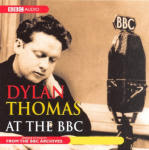
In my eclectic reading recently, I came across Dylan Thomas' essay on his poetics titled "Notes on the Art of Poetry." It brought to mind one of the reasons that I am so entranced by poetry, and especially the delivery of it to the audience.

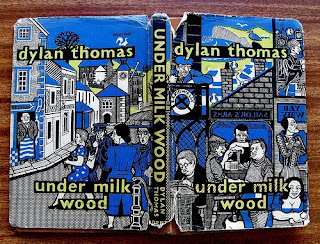
In it Thomas speaks of his fascination with the sound of words, beginning with nursery rhymes as a child. The sound and substance of words came first for him; things like meaning and communication of ideas were secondary. This emphasis on the sound of language permeates most if not all of his poems; it plays a great part in his stories; it is integral to his radio plays. Under Milkwood, his famous play for voices, is probably the greatest example of prose and poetry combined in one work since Shakespeare.

If you're going to make yourself more familiar with Thomas' work, your best approach would be to hear it. Because of his experience working in broadcasting during WWII, he recorded much of his work and much of it is still available.
It is hearing him read, hearing his delivery of the sound and music of the language, that opens the way to an understanding of the meaning of his words and the ideas these words express. "I am a painstaking, conscientious, involved, and devious craftsman in words, however unsuccessful the result so often appears." Words and the way they are used, new expressions shaped from old, all may look odd on the page but resound like church bells in the air around.

Thomas is by no means the only poet who should be heard before he is read. I had but a faint grasp on the poetry of bp nichol before I heard him read it aloud. The dub poets need the voice to convey what the page can not. Any good presenter of his/her own poetry must add something more than can be found displayed in black text on white paper.
Probably because I come from a people who relied on public recitation as a form of community entertainment, on "foardragen," poetry and its presentation aloud mean so much to me. But that's not the only reason. I too love the sound of words; at times I don't care whether or not they mean. In a way it's like opera: who cares what banalities the words may mean, they sound so marvelous!

When I remember Martin Luther King proclaiming, "Let freedom ring!" I hear in my own mind, "Let poetry ring!" Sometimes freedom and poetry are expressions of the same thing.

Let's keep the words and language ringing.