Showing posts with label writing. Show all posts

Wednesday, January 5, 2011

Prose and Poetry

Every now and then I return to thinking about how an artist uses language, especially those who write fiction and those who write poetry. Because I am so involved in poetry myself I want to express my bias right here. But that doesn't mean that I won't express admiration for a creator of fine fiction. Those who toil at the crafts that involve language will always find a special place in my awareness – poets, novelists, short fiction writers, newspaper columnists, lexicographers, editors, speech writers, story tellers, preachers, and the list goes on.

But as I said, poetry is my drug of choice. I'm hooked and I can't quit. Sometimes I envy those writers who establish a reputation as a poet and then switch (with seeming ease) to novels that gather critical and popular acclaim. Sometimes I wonder if Atwood and Ondaatje were ever as dependent on the poetry drug as I seem to be.

But back to me. Sometimes when the blood and spirit aren't being as churned by the forces of poetry as I would like, I have to turn to other disciplines to satisfy my cravings. I have been known to write reviews. This blog is also part of that. My reading becomes heavier – novels and poetry in foreign languages, for instance; history; biography; philosophy. However, usually I turn to writing fiction, short fiction to be precise.

I like short fiction. I tried constructing stories when I was beginning as a writer. In later life, during a period void of poetic inspiration, I began to write a novel, about fifty thousand words about a young person coming of age. I lost it and didn't try very hard to find or rewrite it; I recognized it was nothing special, an exercise to keep my creative side occupied. I did continue to write short fiction whenever I felt the need.

Some years ago a local publication accepted some of my short stories for publication. I had the chance to publish a few more at online sites. So when Arts Hamilton last year called for entries in their “Creative Keyboards” contest, I sent in two without great expectations. I had done the same before for other contests.

Imagine my surprise when one of my tales made the short list of the top ten of all the entries received!

Imagine my surprise when I was invited to read that story as one of the top three! (No, there is no more surprise. It placed third.) I was honoured.

Because I am a poet first, I took some time and mental space to look at the stories that placed higher than mine. The main difference I could see had nothing to do with theme, etc., but with language and how it is used, a difference in style.

My prose style seems to be very similar to the way I write my poems. That thought had never crossed my mind before; writing prose was a different craft, only using the same materials. I came to see how my writing differed from the others. My plot, my story line, is developed through characters' words and deeds. There isn't much introspection, no detailed descriptions, no psychological motivation explored, no sensitivities. You know my characters by what they are and what they do, not by what they think or feel.

And that is also the way I have learned to develop my poetry. Clearly show what is and a way to see it; let the reader/listener develop his own emotional response. That way the poem, my ideas, my creation, can become a part of him. No force, and moreover, no subtle trickery. Simplicity and honesty. It all goes back to the “show, don't tell” principle.

It works for fiction, for prose, as well as for poetry. Hemingway knew that.


Wednesday, August 25, 2010

Expanding Experience

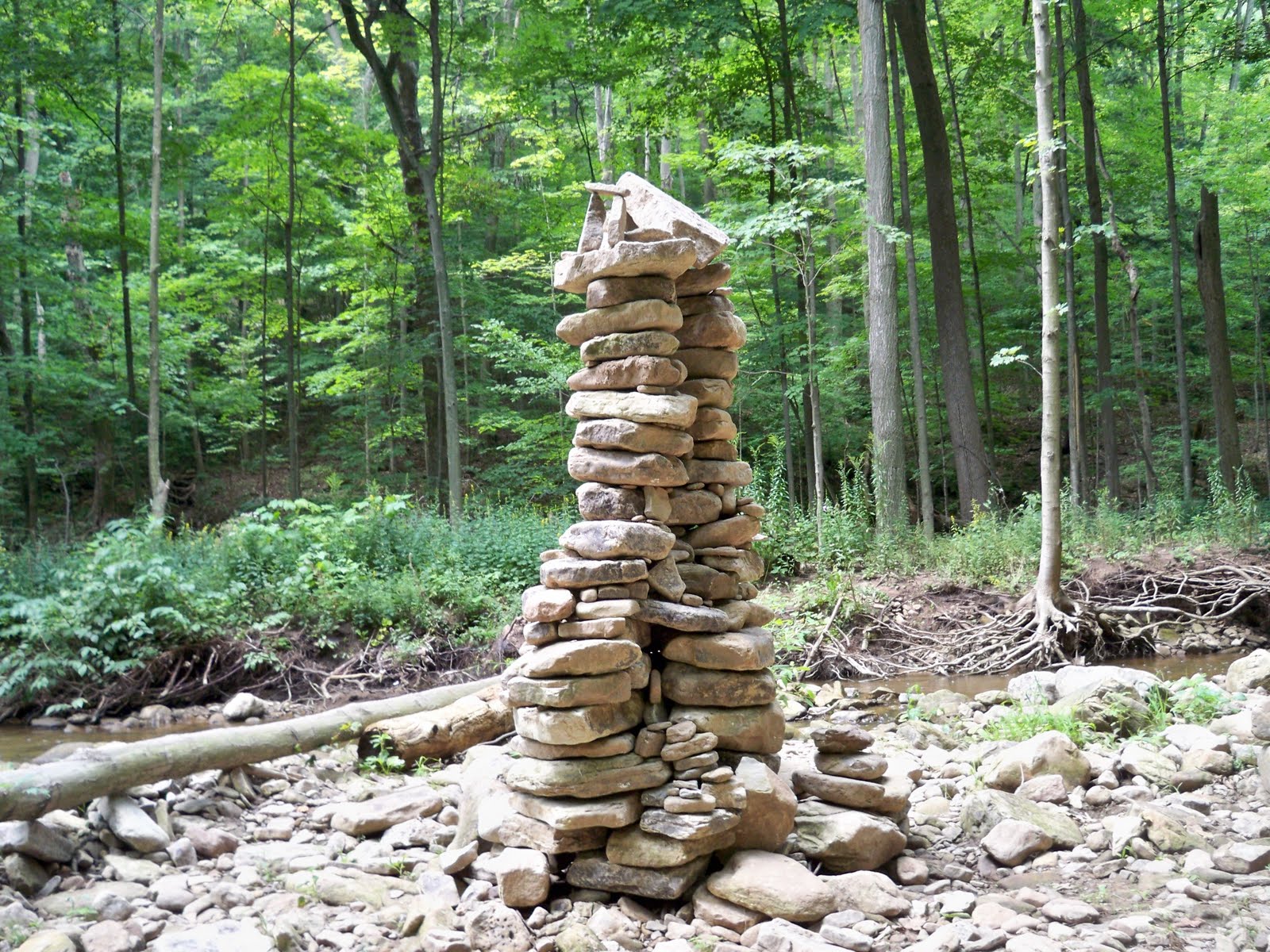
One of the things I do when I write a poem is to take a small image, something that impresses, that catches my attention with the emotional response it calls forth, and expand on it. Not always. Often the image that touches my perception can stand on its own and becomes a haiku. If it elicits one specific response, it will often become a tanka. But for a more expansive poem, the initial experience becomes the beginning of something else, something greater. Building a poem becomes an act reminiscent of constructing a cairn.

It’s not that the first impression has little or no intrinsic value. What happens is that I make connections to other events and emotions, and feel the need to bring them together. Often the first attempts will sound and feel over-sentimental, like a juvenile diary entry. Like building a cairn, shaping a poem takes time and effort.

Let me illustrate with an example – no, not the finished poem itself, but the layer-by-layer construction of it.
Sometime ago I was driving through wooded farmland on one of the four-lane divided highways toward sundown when I spotted some deer drinking from a creek several hundred meters away. Several factors impressed that sight in my mind: the evening light, the distance, the contrast of the natural (creek, deer, woods) and the constructed (highway, automobile, rushing humans), as well as my inability to stop and become a small part of that scene even though I wanted to do so.

Over the next few days that image would not leave me. It became connected to several other things. I was reminded of the creek on the farm where I grew up. I remembered also seeing and tracking deer in that area when I was young. The flowing water reminded me of a young lady I knew who loved to walk beside flowing water and stop to sit with her feet in the flowing water as a way to relax.

All these items came together in one unit, like different shaped stones in a cairn. Had the young lady, while sitting with feet in the running water of a creek, ever been surprised by deer coming to drink? She would be careful not to disturb them. Would she envy their freedom? I remembered that she now lived in a small city, married to a long-distance trucker. I wondered at the emotion she would feel, left alone so long so often. Would she go looking for flowing water to soothe her spirit? Would she remember the deer (the ones only my imagination provided)? Would she wonder if the deer remembered her?
So you see how the glimpse of deer drinking at sundown becomes a totally different thing, with the initial image remaining as a corner stone for the whole construct. My own emotional reactions, even my rational reaction, play only a secondary role to the imagined emotions of a young lady who is not part of the original.

And all that, as poetry, is as valid and real as deer beside a creek beside a highway.

Thursday, August 5, 2010

Poet-Songwriter


Recently an acquaintance of mine published a collection of poetry. Now that’s not noteworthy; I know many writers, and usually somebody is bringing out a book. This person I know mainly as a musician who plays several instruments. I also understand that he was the main songwriter for a folk group some years ago. So we have a reputable musician and songwriter turning his talents to poetry.

Although there are great differences between writing songs and writing a poem, (I know, I’ve tried writing songs. I’ve even attended several workshops by excellent singer/songwriters) it’s not a great leap. Scotland’s Robbie Burns wrote lyric/poems. Some of the old folk ballads are wonderful poems apart from the tunes. So I had some expectations.

Granted, I did not expect a modern Burns. I did not look for comparisons to Leonard Cohen, Bob Dylan, or so many others. But I was certainly looking forward to see what this musician could do with words. And I’m sorry to say all my expectations went for naught. The “poems” in his book were … well I can’t really sum them up in a word or two although “drivel” comes close.

From a musician, I expect music. Since as a songwriter he must be aware of fitting words to rhythms, I looked for sustained rhythms and the use of sound because these are also basic components of poetry. Even the ancient Greeks saw music and poetry as a complimentary pair, as sister Muses.

I was sad to discover his poems do not sing. There is no hint of music, either obvious or latent. When I heard him read some to an audience it sounded like prose, and I thought I was missing something, something obscured by his delivery perhaps. When I examined his book in private, I found that was all there was: prosodic language masquerading (and not very well) as poetry. No marvelous use of language; none of the devices that make a poem the special thing it is. Lacking in imagery, lacking in descriptive phrasing, lacking the rhyme and assonance that connect poetry to music.

The poems about places read even less exciting than a travelogue. The poems about emotions read like a teenager’s diary. Most of the language didn’t rise above a hastily scribbled letter home.

And this is a singer, a songwriter, a musician. And now an artless arranger of meaningless prose. Words without music.

Who dare call it poetry?


Wednesday, July 21, 2010

The Artist's Awareness

I met with an acquaintance who writes poetry a week or so ago. When we were closer and he was just beginning to write, I encouraged him and helped him, in some small ways, to improve. After he moved away I continued to follow his work in various publications. Then it stopped, and I had no idea if he had quit writing poetry or taken up something else (for he was also interested in film and music.)

When I met him recently I was going to ask until I realized immediately that he was not the same man. Oh, he talked about writing poetry and a possible poetry/music/film project. He also let me know about a number of health issues. Throughout our conversation I could sense that the creative urge was still there but greatly subordinate to his mental and physical state. He seemed to me incapable of focusing on anything outside himself, as if he no longer had any interest in the world around him if it did not directly involve his well-being.

At first I was going to chastise him for abandoning his writing but I’m glad I did not. I have come to realize how much awareness must be a basic part of the creative process. I don’t mean a ‘hyper’ awareness, some sense more developed in artists than in others. I’m referring to the primitive consciousness that keeps the senses operating and the mind processing the information the senses receive. The sudden notice of a smell and all the associations it may bring; an awareness of how colours and shapes flow together; the way one thought leads to something other under certain circumstances; all these are part of how we interact with our surroundings and how we understand it.

That’s what poets work from, an awareness and understanding of the world around them. That’s what any artist has. It doesn’t matter if such awareness is called “the Muse” or insight or vision. It is nothing more than any person has. The artist, however, has come to use that awareness in creative ways to enhance what he needs to show, to say.

It’s very much like a muscle the artist or writer exercises almost unconsciously, one that more ordinary people tend to ignore and sometimes even actively suppress.

That calls to mind one beautiful morning not long ago. In the early morning quiet I had paused to sit in the nearby park, simply to think, perhaps make some plans, get away from any pressure in the house. Before the day’s impending heat could overtake the morning I enjoyed the play of sunlight and breezes in the trees and on my skin. I felt aware of my surroundings and even as one with the environment. And then a young lady came by, running along the paved track that circles the park.

You’ve seen them, the early morning joggers. This one was no different: proper footwear, light snug clothing, sweatband at the forehead. I’ll swear there would be a bottle of some special drink waiting where she had stashed it (probably in her car.) The dark glasses to protect the eyes. The ear buds leading up from the I-pod.

And it struck me; she had gone to a lot of trouble to negate all the things I was enjoying – the sunshine, the slight breeze, the movement of leaves on the trees, the singing and chirping of birds, the scurry of a squirrel, the splash of colour in a nearby flowerbed, the scent of a juniper bush. All these external stimuli and all the pleasure they give she was denying herself because she wanted to focus inward. Her feelings concentrated on perspiration and muscle fatigue; all she heard was whatever mechanically reproduced sounds she allowed herself to hear and perhaps the pulse of her own blood; all she saw was just enough to keep her on the chosen path. She certainly did not seem to notice me. In no way was she open to any outside stimulus.

That’s just a case of normal awareness being suppressed, for whatever reason. And what if such awareness is impaired, perhaps even lost altogether? What if I, as a poet, suddenly could no longer see the brilliance of colour, could no longer hear the small sounds around me? If I was unable to enjoy all the small miracles that make my life worth living, could I still write poetry?

I shudder to think of myself so wrapped up in myself that nothing else matters. To what sort of animal is the poet reduced when he has lost his Muse, his awareness of the intricate world outside himself?

Monday, July 5, 2010

Pleasure Through Difficulty

I read somewhere a few months ago an interview with Alberto Manguel, the Canadian writer, editor and anthologist, and marked down a phrase that resonated with me. I may not have it word for word, but he expressed something along the line that “reading is pleasure through difficulty.” What lay behind this thought, if I remember correctly, was the argument that the pleasure we derive from reading comes from a willed and directed action.

Let’s look a little closer at this argument. Much of what brings us pleasure comes from a passive attitude: hearing music in whatever form, viewing painting and sculpture or any of the plastic arts. Theatre and movies are a combination of these two; all we have to do is to put ourselves in their vicinity. The enjoyment of nature, the pleasure of the outdoors, the experience of a different place, the company of family and friends, all fall within these parameters. To enjoy the written word, however, is something completely different.

Reading for pleasure a very deliberate action. It has to be separated from other reading activities such as to gain information, to find explanations or directions, and all the other uses we find to communicate by the written word. To become “literate,” to gain the ability to read and write, takes a lot of work long before any true “pleasure” can come from it. A person who cannot read or write well finds no pleasure in such activity.
Once you have attained a level of skill, you can begin to read material that may have no application to your daily life. Reading for pleasure takes the imagination and applies it to words and concepts, the stories of places and people, or emotional and rational suggestions that move our spirit in a way that makes us feel good about ourselves and our world, that gives us pleasure.

Choice and effort, we see, are the twin foundations of enjoyment through reading. So how does a poet make these choices easier for his intended audience/readership? Remember, unless it is forced upon the reader he will have no reason whatsoever in these times to approach poetry for fun. The poet must make it pleasurable. Any concept hidden in language not familiar to his audience is soon forgotten except for by a few critics and cognoscenti. This seems to point to two things. A poet should make his words and ideas accessible to as many as possible and he should do his best to present them in a memorable way. There are poets I read whose words ring though the depths of me but who bore me when they read for an audience. There are also poets whose poems leave me cold until I can hear their voice echoing inside my mind. And occasionally a miracle happens – the poet who sounds great on the stage and still sings from the page.

Those are the ones I go back to, again and again. They make me feel the pleasure of reading and make me glad I am literate.

And the difficulty of reading is worth all the effort.


Monday, June 14, 2010

Women Poets


I love browsing around in second hand bookstores; I usually find something that catches my fancy. I even snuffle through the well-used and abused sections of second hand department stores, Salvation Army shops, Goodwill, Value Village and the rest.

Not long ago I came home with a volume titled 20th CENTURY WOMEN”S POETRY, edited by Fleur Adcock and published by Faber. What caught my attention was the blurb on the back claiming, “This anthology of women’s poetry is destined to establish a canon by which other, more partial anthologies will eventually be judged.” Inside I found a good representation of British, American, some Canadian, and a few other English language woman poets. After perusing through the contents, some familiar and some not, I carefully read Adcock’s introduction to discover the thought process behind the collection.

Adcock admits there is no special tradition in women’s poetry, nothing that should make it be seen as something different or separate. The fact remains that for many years men, men who didn’t take women seriously, dominated publishing. The feminine suffix added to poet, producing “poetess,” almost becomes a diminutive; no wonder women poets have dropped its usage.

Women were writing. Some lived in social isolation; some flourished in the limelight of a man; others gained attention by being outrageous, even scandalous. This does not take away from the power of the poetry. There is an excellent mix here of well known poets and those not well known. Some have been almost forgotten. Some seem somewhat dated. All have a quality that still appeals at the turn of another century.

Today women poets are being published without preference or reference to sex. Female poets are being read and taught. They seem to have reached a real equality in the literary world that they never had before.

Still, I believe there is some cause for concern, a trend we should watch with care. The work of women poets, of women writers, may get shunted into the lit section of “women’s bookshops.” In larger stores they may be relegated to the “women’s” section rather than with all poetry. And there is the dismaying trend in universities to make female poets part of “women’s studies,” and thereby creating an unwanted ghetto.

Men and women are one in their humanity, one in their dreams and perceptions, one in their use of language. A poem in itself has no gender. If it does it is as a result of the reader, not the writer. When the waters of two streams come together to form a creek, how can you separate them again? Women have moved from poetesses to poets. There can be no greater injustice than to marginalize them again.


Tuesday, May 25, 2010

Language in the Future

Sometimes I become very aggravated by some of the ways that people are using language today. It seems the atmosphere is full of acronyms and short cuts that take away from the beauty and meaning of full round sounds.

I suppose it is part of the normal development of speech and communication. We’ve come a long way from inflected grunts. As the human race developed, the needs and ways of communicating evolved too. Vocabulary increased, often borrowing from other languages. Meanings of words and phrases changed as need directed. Sounds could be recorded, first in the symbols of runes and alphabets, more recently as sounds themselves.

An alphabet seemed the perfect way to preserve language except for a few flaws in the system. Not every community agreed to what sound was portrayed by what character, nor on how the sounds/letters should fit together to carry a meaning all knew instantly. In the flush of the printed word attempts were made in several languages to standardize words and their usage. Language, however, will not be contained by regulations.


Change is still happening, partly through the development of new technologies for disseminating and storing language and partly through the laziness of many of us who use them. Acronyms have become so common that they have become a means of identifying things unrelated to the word the acronym spells. Text messaging and electronic “chat” demands getting the most with the least and produces short cuts in the language that sound fine but look ugly.
So what? you may ask. But the beauty of language is one of the greatest achievements of humanity. To destroy that beauty, even to neglect it just for expediency, would seem to me to be a decline back towards barbarism. Without the fullness and diversity of all the sounds we have available language becomes stunted, withers.

Change, as we all know, cannot be stopped. But at the same time what we have built needs to be preserved. Poets in a society have the responsibility to ensure the continuation of the beauty. They are the ones who work with its intricacies and possibilities in ways no other can.

So one of the first concerns of the poet is the beauty of language, of proclaiming and propagating it. It disturbs me to find poets putting forth prosaic language just because it might appeal to more people. Poems should sing as well as communicate.

Just because so many people are doing it is no reason for a poet to dilute the power of the spoken or written word.

So wht r u w8tng 4?


Tuesday, May 18, 2010

Older Poets

Last week I attended a gathering of older poets. My mind has some difficulty in referring to them. When I think “old poets” all those from Chaucer through the Victorians come to mind; when I refer myself to “senior poets” I envision those from my lifetime who have been a source of guidance and inspiration for my own poetry. How, my enquiring mind asks, do I refer to men and women who wrote little while they were heavily involved in living but now, with retirement from their usual activities, find time and ambition and ability to write?

And again, what about those poets who have been writing steadily for many years but never slowed or lost any edge of their creativity? It used to be thought that artistic productivity was the realm of the young, that it began to decline at mid-life. That theory has certainly been overturned.

This gathering was a chance to meet and share for a variety of poets whose work was included in Celebrating Poets Over 70, a new anthology produced by the McMaster Centre for Gerontological Studies (and Tower Poetry Society) in their Writing Down Our Years Series, collections of work by older adults. Some of those present had been writing and publishing poetry for many years; some had only recently begun to express themselves creatively in poetry. But they seemed to fit together; they connected not so much through their poetry as through their common life experience and worldview.

The life in the room reflected the life to be found in the book: serious and light, filled with hope as well as memories, with a calm knowledge of the basis of existence. These men and women accepted themselves and each other for their creativity. Anything else at that time was secondary. The passion, the flaming ebullience of the young may have been tamped but it was still alive and well among the old. The body might display its weaknesses but the mind and spirit exuded strength.

Over seventy. It occurs to me that I will soon achieve that plateau. If these poets are any example, there is no excuse for me to rest on my achievements. As long as ability and need is there, I can and will continue. I want to be an old poet, a senior poet, to be an elder full of “late life creativity.”

Like them, I want to be the laughter of a spring brook in the soft coming of a winter.

Friday, May 7, 2010

Linked Art

Personally I’m not one for “writing exercises,” those little ideas that are supposed to enhance style or make creative juices flow. However, recently a fellow writer approached me and asked me to set him a task; he was bored and wanted to write. He just had no idea what to write about or how to start.

I had recently come into possession of a small book authored by two poets. Rather than separate sections or groupings, each poem was written in response to one of the other’s existing poems. That way, if each had sent the other ten poems the book would end up with forty, twenty originals and twenty responses. There was no specified manner to respond; it could be to the subject, to an image, an emotional or rational response, no restriction.
I have always liked the concept of linking things, works of art especially, together to form something separate and perhaps greater. For a number of years now I have taken part in a local art celebration where poets are asked to respond to a piece of visual art in poetry. The poem and the art it responds to are then displayed together in storefront windows for a week.

I have written in response to paintings, drawings, and such but also to pieces of sculpture. Some of the most challenging work was in response to crafts: glass boxes, a jar, pieces of jewelry, fabric. I find the visceral response to such things more perplexing to explain even in non-poetic concepts. The intriguing thing here is to be able to establish a link, sometimes obvious, sometimes a little obscureThe Japanese have a tradition of renga, linked verse. Over the centuries the format (subject of certain verses, segmentation of the whole, and other “rules”) became strictly observed. I understand that the modern practice, in the last half-century or so, has moved away from that meticulousness and is more open and flowing without losing spirit and purpose. It reminds me of a piece of linked or collaborative art I was involved with in the late 1970s that was called “Peace Renga.” Writers, musicians, and other artists were invited to submit work on the theme of world peace. Many, if not all, were linked together and performed several times in different venues – music was played, prose and poetry read, paintings and photographs projected on a screen for a very moving presentation. I was proud to provide a small part of the whole, to be part of a community declaration in art.

I find that most of my writing is in response to something external rather than having something burning inside demanding expression. My response is a way to better understand, to make sense of the world around me to myself and share that understanding and viewpoint with others. In this way responding to another’s response creates for me a deeper level of seeing, of knowing.But back to my friend with the demand for a writing exercise. I sent him two lines of poetry with no hint as to title or subject matter. I asked him to respond with the same, no more than three lines if he must, linking it to my original as he saw fit with no explanation needed. That was a couple of days ago; he hasn’t replied yet. If it doesn’t get him in a writing mood, at least it has served as subject for my little meditation.

Thursday, April 29, 2010

Rewriting: Self-Editing


One of the most valuable lessons I learned early in my writing career was that of setting myself apart from my work and seeing it as someone else might. Perhaps it is strange for a poet to say that an author of fiction talking about his own process first explained this to me. The concepts he expounded rang true, so true that I took the ideas to an older poet who I admired as a mentor. He acknowledged that the poet, perhaps even more so than any other writer, had to edit his work relentlessly and carefully. A poem should be concise and precise, a polished jewel. (At the time he was writing and publishing a lot of haiku, and had the explanations and examples from his own work at hand.)

Certainly, this included mundane things like spelling, punctuation, tense, and all the small irritants that could lower the quality of one’s work. But even more important than this was the use of words, of language.

He taught me many things. He taught me to plan a poem, to start with a definite idea of what I wanted to say and how to say it whether directly or through metaphor or simile. Cut all the words and phrases you don’t need, he would instruct. You don’t have to describe an orange as round. There are no square ones. Don’t get sidetracked by another idea that influences or modifies your original. If necessary, turn that into its own poem. Be aware of the influence of even the smallest word: ‘the’ apple refers to one specific apple; ‘an’ apple refers to any apple the reader may envision. Apple without any article suggests the essence of being apple-like and somewhat unreal.

Poems often try to convey ethereal, unsubstantial matters using concrete and physical images. Remember that it is easier and perhaps more effective to describe a boundary as a wall rather than a force field although it is probably neither. Use words that describe common, everyday experiences (and delete one of those words; ‘common’ and ‘everyday’ are almost identical) to hold the readers/listeners attention so that they too will reach your conclusion with you. Whatever you do, don’t pad your work – be it poem, story, article, resume – because it will ring untrue to a careful reader.

Spelling and grammar speak for themselves. If you don’t spell correctly, the words may not mean what you think; if you have no idea of the order and relationship among words, you can’t control what they do or say. It’s as simple as that.

Always edit; if necessary, rewrite. Very few poems, if any, leap perfect to the page from an imperfect mind.


Saturday, January 16, 2010

A Poem Should . . .

A few days ago I was reading through an anthology, one of those where somebody has put together a number of poems (this time it was one hundred) without any theme or other formal structure. It could have been titled "my favourite poems of all time" but wasn't. Most of the poems were from England and North America (including Canada) in the nineteenth and twentieth centuries.

Nothing wrong with that, only it did seem a needless waste of energy and resources. But even in all its glorious blandness, it made me stop and ask myself, "What is it about a poem that would make me take such notice of it that I would go back to it time and time again?" Some time spent ruminating and reading, checking my personal "favourites," led to the conclusions I'm setting down here.

Without analyzing the poems into destruction, I discovered some common threads, characteristics of poems that made them appealing to me. I found I could distill them down to three concepts.

One, the poem must transmit or transfer an emotion. If a poem deals with feelings I have never felt or don't find important, it doesn't touch me, doesn't work for me. This doesn't make it a bad poem; it's just something I don't go back to. Take for instance the difference between a love poem and a poem about love; for me a love poem is a sharing, an experience "inside," while a poem about love leaves it all sitting in space between the author and reader, "outside."

Two, the poem should, in its way, be rational. It should catch my mind long enough to force me to think about its subject, what it is trying to say or convey. It should not be like a lightning bolt, all instant flash and nothing left behind, but more like fine whiskey of the brain, with a growing glow and an insistent warmth that continues long afterwards.

Three, the poem should make me wonder, should expose a little of the everyday miraculous that takes special effort to bring to my awareness. This is the "art" for which the craft is practiced; this is the holiness of creation - the ability of words to extend me beyond my ordinary self.

So that's how a poem works for me. It should make me feel; make me think; make me wonder. And not all to the same degree. A poem that makes me wonder may not seem as rational or emotion-based as others; the same goes for any of the three concepts. I'm just trying to say that those three must be present in some combination to work as poetry. To work for me.


Friday, December 18, 2009

Erotic or Pornographic

The warning here is that this entry is more personal in its opinion than usual. Don't let the XXX fool you; there are no pictures or descriptions here of people engaging in sexual activities for your 'prurient' pleasure.

I do want to take a little space to explore the porno-erotic question, not as a legal matter but as it applies to my own writing. Some of my more socially conservative friends think my poems and stories that have a more or less sexual basis are "pornographic." If writing or portraying any and all sexual activity is so then what they do in their bedrooms is not love but pornography (or prostitution, to revert to the Greek root of the term.)

Sex is a natural daily part of human life. Talking about it, writing about it, depicting it in any of the arts, is just as natural. It is the diverting of the relationship to a not inherent purpose that, in my eyes, makes pornography.

The matter arose some time ago when I answered a call for erotica with three poems and a short story. In due time they were returned to me with a note that my entries were not explicit enough. Oh, I agreed with that, but the editors had asked for erotica; I consider erotica to be suggestive rather than descriptive, a lyrical treatment rather than a prosaic one.

A good poet and a good story teller presents more than one level of meaning. My poems do that by approaching the actions and emotions from a certain point. My short stories will often use sexual activities to explain and explore character rather than be the total focus of the plot.

So, what does it all boil down to? The main fact as I see it is that both sides of the presentation of the material have to be in agreement for the work to be either erotic or pornographic. Let me explain. If I write something that I think is erotic but you read it, treat it as though it were pornographic, then it has lost its eroticism. But vice versa, if I write something with only pornography in mind and a reader finds it erotic instead, that too has lost its purpose.
Heaving a tired sigh, I will remark: one man's eroticism is another man's pornography.

At least as I see it.

Tuesday, December 8, 2009

The Prose Poem

A number of years ago I won a prize for a prose poem. Since then I have been asked every now and then what the distinction is between poetic prose and a prose poem, and how you can tell the difference. I remind the questioner that (in modern times) the prose poem began as a poem that rebelled against the strictures of form in much the same way as free verse did. With both of these, the main difference from conventional poetry is in the presentation.

A prose poem should first of all be a poem; it should use language to do what poems do. It can, and should, use poetic devices that are not acceptable in simple prose. An extended metaphor may be the underlying conceit. The use of meter, of repetition, of internal rhyme - all the tools employed by the poet only enhance the prose poem.

Try taking a formal (shaped) poem and present it as prose: "Let me not to the marriage of true minds admit impediments. Love is not love which alters when it alteration finds, or bends with the remover to remove." Shakespeare's sonnet remains just that, no matter the presentation.

In my own work, I often develop a poem/idea in paragraph form, throwing in everything that I want to say and often twice. Then I look for places the piece can be broken into sections or stanzas. After that, I tackle each stanza separately, honing it down to what needs to be expressed in the best way I can express it, always with a sense of the whole. Only after that do I take a look at it and consider form. Would certain restrictions enhance the poem? If I present it as free verse, will the subtleties of rhythm be lost? Different questions for different presentations. Even going back to the prose poem is considered.

All that thought goes into the formation of each poem. That's why poetry is not simply inspiration, it is a learned and practised craft.


And by the way. If your free verse poem, when the line breaks are ignored, looks and sounds like a prose paragraph, it probably is. Try to write a poem using the tools inherent in language.

Sunday, November 29, 2009

Poet / Storyteller


The other evening I went out to hear Charlie Chiarelli perform. He's an actor, musician, and storyteller who made his name telling stories about his immigrant Sicilian boyhood here in Hamilton. He's no longer working the Canadian-Sicilian bit but was trying out a new direction. I enjoyed it; it suits him.
He is taking stories (plots) from Boccacio's Decameron and using them to tell today's stories. In itself, this is nothing new; Shakespeare too borrowed freely from Boccacio. The surprising thing is that the stories, transposed into today's language and imagery, come across very well. It may be true that, as I've been told, there are only a small number of possible basic plots: the rest is details and embellishments. In Charlie's hands (and mind, and mouth) the embellishments made the stories.
The twist came when our host introduced him as "the poet of the North End" and at first I went "Humphf, a poet? Not likely." But I began thinking. The main function of the bard, the skal, the scop, the poet in the beginning was to remember and tell the stories of the tribe. The storyteller continues that tradition perhaps even more so than the poet.
Now that poetry has given in to self-indulgent introspections and explorations of emotion and experience, who is left to tell us about things, and other people, and far away places? Even the singer/balladeer has become self-involved. The popular media is so skewed that much of it is irrational flim-flam, an entertainment for the masses. So who will tell the story about Jake down the street or what happened to Betty last week? The mantle seems to have been passed to the storyteller, the one who can keep it straight and simple the way the poets and the singers used to.
It's probably a good thing that many of our immigrants come from places and cultures that still honour the storyteller. Without such "new" blood our records of the simple parts of our lives could become as distorted as soap operas. Who will record the true story of Colvin's Brave Stand? Not one song will be recorded, not one poem published. But sometime down the road a storyteller will say, "Once there was ... "
Poets, in a time of unrest and injustice we need to do more than bemoan the times. We need to lead by example; we need to keep and tell the stories of ordinary people.


Tuesday, November 24, 2009

Literary Genres


I don't know if it's because of envy or what, but sometimes I find myself getting irritated by writers who, having achieved a successful reputation in one genre of literature suddenly switch to another. And find even greater acclaim there!


I'm thinking of people like Atwood who had a fine reputation as a poet before she began publishing novels. Ondaatje went the same route. Nowadays the poems that they publish are few and far between. They concentrate on the novel; that's where the glory and the money are. As representative of those who continue to struggle in their original genre, I sometimes feel that we have been discarded. Poets and their work are not worth much to a modern society. It must be fed on massive tomes of prose.


It's not that I write only poetry. I've written some fiction, some non-fiction, essays (some of them, like these blog entries, short and pithy.) My problem, if "problem" it is, lies in the fact that I believe in poetry. Any other writing is, for me, an adjunct to my single purpose. I ride the horse I bought and am not looking to trade for one more handsome or stronger.


Once I wrote most of a novel. It had reached just over a hundred pages, when I lost it. I considered beginning it over again but figured that if the forces that control the universe saw fit not to let me bring that work forth, it could probably exist without it. No one will ever know.


I continue to compose, write, publish, and share poetry because I must. It defines who and what I am: a poet, not a novelist or essayist; a writer, not a singer or musician; an image maker, not an actor or dramatist. I can live with that, and do so gladly.


Sunday, November 22, 2009

"Cat" Poems


At a reading in Toronto the other evening, an acquaintance brought up what he referred to as my wonderful "cat" poem. I had difficulty remembering which poem he meant. Over the years I have written a number of poems about or featuring a cat. He was referring to one I had read to a small gathering in Gage Park several years before. I didn't have that one with me so I read a more recent one. The incident made me pause and consider.


Since I began to go out with my wife, long before we were married, we have always shared our home with one or more long-lived cats. One lived for nineteen years, one for over seventeen, and the current cat is going on sixteen and still quite healthy. So a cat, in one way or another, has always been there. And, since we write about what we know, about what touches us, it is no wonder that I have produced some "cat" poems.


I don't write little lyrical passages praising cats. Cats (for me) deserve much more. I tend to use one as a metaphor, sometimes for myself, my inner self, or for all humanity in its relationship to the natural world. I often use "catness" as a mirror to being human. Not in a fable-like way, nor do I endow a cat with human characteristics. Usually it's the other way around: I point out the "catness" inherent in people.


Cat poems have been good to me. They have won me prizes (cash and prestige) and brought me much satisfaction. Perhaps I'll leave you with one of my earlier ones.

SO LIKE A CAT

Your cat has particular manners, ways
developed for her own purposes. A voice
that leaps from articulate whisper to
bone-scraping howl in less than a second.
Hiding places that will change just as fast
as you can discover them. She has need
for constant warmth; on cold days she cocoons
among blankets, in the sun she stretches
out full length on her back.
----------------------And you have wiles
in common with your cat. Your body too
stretches to capture my warmth, slips away
from cool indifference. The place you hide
changes with the moon's phases. Tentative,
my hand reaches out for your approval.


Tuesday, September 29, 2009

Poetry Workshop

I just want to express a couple of thoughts on workshops, poetry workshops in particular. You know, those meetings whose main purpose is to provide a forum for a poet to present his work before an audience of his peers, and receive considered feedback rather than instant reaction.

We're not considering closed groups here. Those also have a role to play; they become intimate as the members grow together. This is about open groups, no membership required.

There are several things you should be aware of when participating. Because you approach the group for a stated purpose, to receive critical assistance, don't bring a poem which you don't believe you should change, that you think is so good that you just want to show what you can do. Your friends and peers may well cut it to ribbons to show you how they would improve it. If you don't think a poem needs improvement, don't bring it. The group is not there to heap praise; don't expect it.

Also consider this. Since it is not a closed group but open to anyone expressing an interest, making a presentation to such an audience can be considered a form of publication, especially if hard copies of your work are distributed. You have very little control over what happens to those copies in the hands of your "public."

Just a few things to consider. Remember, when you ask a friend to become a critic he also becomes an antagonist. Usually the frienship remains unharmed.

Monday, September 21, 2009

The Inherent Rhythm of Language

The other day a lady friend of mine brought a new poem to a workshop we both attend. Her poem surprised me because it was not in her usual style, longer lines with almost no sense of a cohesive rhythm. This time she had done something completely different.

Not only were the lines short, almost all the same length, but she had marked (and left those marks on the page inadvertently) each line with the number of syllables she had used. Most lines were four syllables, with the occasional use of five or three.


Now I'm not one to advocate counting syllables in poetry instead of using and playing with established rhythms, but in this case it worked. It helped that she used a four syllable line, most usually of two words; in English it seems difficult to put four syllables together without ending up with an iambic dimeter or a close variation thereof with a trochee or spondee. There seems to be no way a unit of four syllables can stand without at least one, and more comfortably two stresses. And this becomes a natural iambic rhythm, pleasing to the ear and to the mind.

This started me reflecting on the natural rhythms of languages, especially Indo-European languages with which I'm familiar. For me, iambic feels so right for English, (much more so than for Old English and even Middle English.) daDUM daDUM daDUM daDUM seems to roll so fluently from the throat. On the other hand, German, Dutch, etc. seem to come into being as a stream of trochees: DUMda DUMda DUMda DUMda.
French, again, has another and separate rhythm pattern expressed (to my ear) in anapests, dadaDUM dadaDUM dadaDUM dadaDUM (see Gilles Vigneault's "Mon pays ce n'est pas un pays c'est l'hiver.") The foot my ear finds most often in the Italian language, and I believe also in Spanish, is amphibrachic, with the stress on the penultimate of a three syllable foot, daDUMda daDUMda daDUMda daDUMda.


Ah, marvel at the subtle intricacies of the rhythms of language! Truly it is a reflection of the music of the spheres, the sound of all things working and singing together!

Wednesday, September 16, 2009

TANKA

Recently I was honoured to receive a real introduction to the Japanese poetry form, tanka. I had been aware of it for a long time but never tried to explore it; I saw it as an extended haiku, a haiku with two unnecessary lines added, a bastardized form if you will. I was wrong, very wrong. The tanka form is the older of the two. Haiku developed from the objective part of the tanka, and developed rules about seasonal words, etc. which do not restrict tanka.


Tanka consists of two sections. One is the objective observation of something affecting the poet and often expressed almost like the haiku that derived from it. The second is the emotional and personal reaction of the poet to the described matter, a very subjective statement. The blending of these two into a cohesive whole make the tanka.
Forget about syllable counts and other frivolities. Japanese kanji and other linguistic elements do not compare closely to syllables. It is better, as in haiku, to use the smallest number of simple words.
For form's sake we continue to use a five line layout. If the first segment is the objective, the haiku observation, the latter should be the subjective and emotional expression. The middle line may often become a turning point between the two, a part of both observations, but again there is no steadfast rule.
And, as in any good poetry, show rather than tell.


Thursday, August 27, 2009

Shaping a Poem


I've just finished judging the entries for the seventeen-year-olds in the Power of the Pen contest run by the public library. The choice this year was more challenging than last; for the first time I gave out several Honourable Mentions, something I had never needed to do before. There were five poems vying for two places. I gave the three that didn't win or place those honourable mentions.

The entries became a goad to write about shape in poetry, as it differs from form. Most of the entries were centered rather than left margin justified as is the usual manner. Centering, especially three or four word sentences for no specific effect, becomes very annoying. Almost as bad is the "concrete" poem. We all know them: the love poem shaped like a heart, the angel poem shaped like wings, the one about trees taking the form of a tree.

But sometimes a poem takes on a shape of its own, something internal that is part of its manner of expression. It may indent different lines from the margin for emphasis of those lines. Different margins for differing length of line may be used. The first word of a line may be placed in relationship to a word or phrase in the previous line, stressing how it expands or defines that word or phrase. The reasons go on.

Here is an example of its use by e. e. cummings.

The main reason for these words now is because the poem I chose as winner in its category for the Power of the Pen uses such placement of lines on the page and uses it well. By this means it emphasises both shape and meaning of the poem.
I pray it doesn't happen again. A different librarian is in charge this time and I hope she can see the rationale behind keeping the format, that the poem as it appears is more than a string of words.
Like a cubist painting is more than lines and colours.