Showing posts with label creativity. Show all posts

Wednesday, January 5, 2011

Prose and Poetry

Every now and then I return to thinking about how an artist uses language, especially those who write fiction and those who write poetry. Because I am so involved in poetry myself I want to express my bias right here. But that doesn't mean that I won't express admiration for a creator of fine fiction. Those who toil at the crafts that involve language will always find a special place in my awareness – poets, novelists, short fiction writers, newspaper columnists, lexicographers, editors, speech writers, story tellers, preachers, and the list goes on.

But as I said, poetry is my drug of choice. I'm hooked and I can't quit. Sometimes I envy those writers who establish a reputation as a poet and then switch (with seeming ease) to novels that gather critical and popular acclaim. Sometimes I wonder if Atwood and Ondaatje were ever as dependent on the poetry drug as I seem to be.

But back to me. Sometimes when the blood and spirit aren't being as churned by the forces of poetry as I would like, I have to turn to other disciplines to satisfy my cravings. I have been known to write reviews. This blog is also part of that. My reading becomes heavier – novels and poetry in foreign languages, for instance; history; biography; philosophy. However, usually I turn to writing fiction, short fiction to be precise.

I like short fiction. I tried constructing stories when I was beginning as a writer. In later life, during a period void of poetic inspiration, I began to write a novel, about fifty thousand words about a young person coming of age. I lost it and didn't try very hard to find or rewrite it; I recognized it was nothing special, an exercise to keep my creative side occupied. I did continue to write short fiction whenever I felt the need.

Some years ago a local publication accepted some of my short stories for publication. I had the chance to publish a few more at online sites. So when Arts Hamilton last year called for entries in their “Creative Keyboards” contest, I sent in two without great expectations. I had done the same before for other contests.

Imagine my surprise when one of my tales made the short list of the top ten of all the entries received!

Imagine my surprise when I was invited to read that story as one of the top three! (No, there is no more surprise. It placed third.) I was honoured.

Because I am a poet first, I took some time and mental space to look at the stories that placed higher than mine. The main difference I could see had nothing to do with theme, etc., but with language and how it is used, a difference in style.

My prose style seems to be very similar to the way I write my poems. That thought had never crossed my mind before; writing prose was a different craft, only using the same materials. I came to see how my writing differed from the others. My plot, my story line, is developed through characters' words and deeds. There isn't much introspection, no detailed descriptions, no psychological motivation explored, no sensitivities. You know my characters by what they are and what they do, not by what they think or feel.

And that is also the way I have learned to develop my poetry. Clearly show what is and a way to see it; let the reader/listener develop his own emotional response. That way the poem, my ideas, my creation, can become a part of him. No force, and moreover, no subtle trickery. Simplicity and honesty. It all goes back to the “show, don't tell” principle.

It works for fiction, for prose, as well as for poetry. Hemingway knew that.


Wednesday, August 25, 2010

Expanding Experience

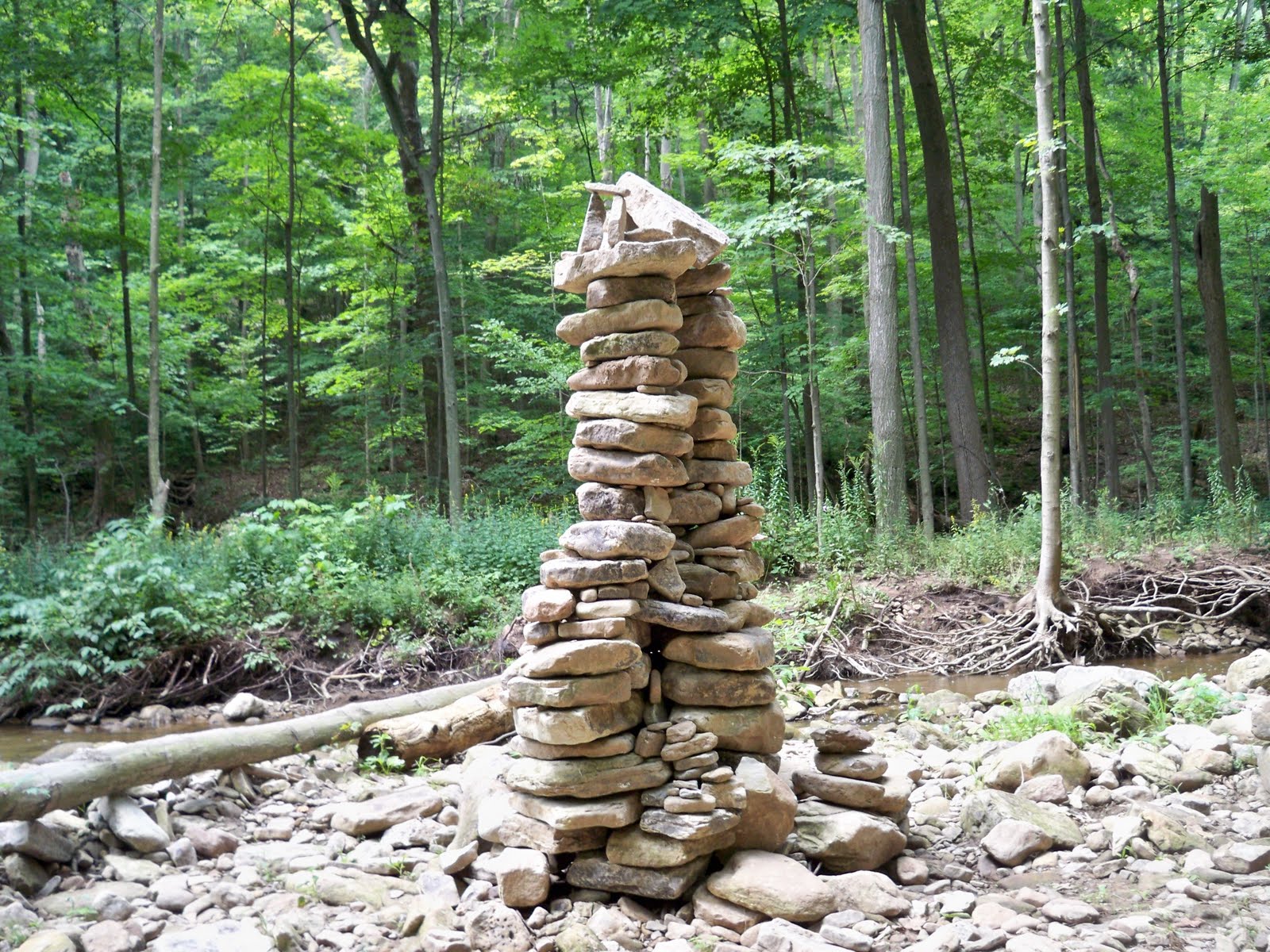
One of the things I do when I write a poem is to take a small image, something that impresses, that catches my attention with the emotional response it calls forth, and expand on it. Not always. Often the image that touches my perception can stand on its own and becomes a haiku. If it elicits one specific response, it will often become a tanka. But for a more expansive poem, the initial experience becomes the beginning of something else, something greater. Building a poem becomes an act reminiscent of constructing a cairn.

It’s not that the first impression has little or no intrinsic value. What happens is that I make connections to other events and emotions, and feel the need to bring them together. Often the first attempts will sound and feel over-sentimental, like a juvenile diary entry. Like building a cairn, shaping a poem takes time and effort.

Let me illustrate with an example – no, not the finished poem itself, but the layer-by-layer construction of it.
Sometime ago I was driving through wooded farmland on one of the four-lane divided highways toward sundown when I spotted some deer drinking from a creek several hundred meters away. Several factors impressed that sight in my mind: the evening light, the distance, the contrast of the natural (creek, deer, woods) and the constructed (highway, automobile, rushing humans), as well as my inability to stop and become a small part of that scene even though I wanted to do so.

Over the next few days that image would not leave me. It became connected to several other things. I was reminded of the creek on the farm where I grew up. I remembered also seeing and tracking deer in that area when I was young. The flowing water reminded me of a young lady I knew who loved to walk beside flowing water and stop to sit with her feet in the flowing water as a way to relax.

All these items came together in one unit, like different shaped stones in a cairn. Had the young lady, while sitting with feet in the running water of a creek, ever been surprised by deer coming to drink? She would be careful not to disturb them. Would she envy their freedom? I remembered that she now lived in a small city, married to a long-distance trucker. I wondered at the emotion she would feel, left alone so long so often. Would she go looking for flowing water to soothe her spirit? Would she remember the deer (the ones only my imagination provided)? Would she wonder if the deer remembered her?
So you see how the glimpse of deer drinking at sundown becomes a totally different thing, with the initial image remaining as a corner stone for the whole construct. My own emotional reactions, even my rational reaction, play only a secondary role to the imagined emotions of a young lady who is not part of the original.

And all that, as poetry, is as valid and real as deer beside a creek beside a highway.

Tuesday, August 10, 2010

Attitude Poetry

There’s a fellow poet with whom I was discussing the basics of poetry not long ago; on some things we agree but on others we don’t. That, I suppose, is to be expected.

We both agree that language is basic but each has a different emphasis on the way it should be used. I prefer to keep my words and expressions working the way they usually do. Nouns name things, verbs are action; adjectives describe nouns, adverbs explain action. They fit together in phrases and clauses. My friend will often turn a noun into a movement or a verb into a thing. That’s not new; we “squirrel” things away; a wave is an action or a thing. He just likes to do the same with words we don’t think of using in such a way.

He claims it helps establish “attitude.” Attitude, he says, is the second most important principle of poetry. Here we disagree. Rather than something as tenuous as attitude, I prefer to emphasize the tools used to make poetry —similes, metaphors, images, sound, rhythm, and shape — something he puts much lower on the list. So I began to consider attitude as an integral part of poetry.


Several instances that seemed important crossed my mind.
One occurred when someone read one of my poems before a group; he read it as words on the page, without the expression I would have given the delivery, without my “attitude,” if I could consider it like that. The second, strangely enough, was Cassius Clay/Muhammad Ali with his ‘poems’ not only predicting the outcome of his fights but also the descriptive “Float like a butterfly, sting like a bee,” phrasings that were new to the prizefighting game. Ali had attitude, physical and verbal. His words, his poetry, caught the ear and demanded attention.


I’m quite sure that this was what my friend meant by claiming poetry must have attitude. If a poem doesn’t grab and shake its hearers, it might pass away as if it had never been. And in a way this is also a valid point, this emphasis on attitude.

Jamaican-born Dub poetry grew out of this sensibility. Dub doesn’t live by the written word; its vitality lies in its performance. I grant that the tools of poetic language (rhyme, rhythm, etc.) are a vital part, but its attitude is most recognizable. Similarly today’s slam poetry with its aggressive and competitive aspects depends on attitude more than on well-formulated thought progression.

The question of attitude remains for me a matter of balance. Certainly a poem needs something special to make it stand apart from the common flow of words in our lives. However this expressiveness, this attitude, can become a cover hiding flaws, a thick coat of paint over the incipient rot in the wood.

After consideration this emphasis on “attitude” my friend espoused has moved up somewhat in my view of poetry and poetics. But care must be taken. It is too easy to push too hard, to blow too loud, and defeat the whole purpose of the attitude.


Thursday, August 5, 2010

Poet-Songwriter


Recently an acquaintance of mine published a collection of poetry. Now that’s not noteworthy; I know many writers, and usually somebody is bringing out a book. This person I know mainly as a musician who plays several instruments. I also understand that he was the main songwriter for a folk group some years ago. So we have a reputable musician and songwriter turning his talents to poetry.

Although there are great differences between writing songs and writing a poem, (I know, I’ve tried writing songs. I’ve even attended several workshops by excellent singer/songwriters) it’s not a great leap. Scotland’s Robbie Burns wrote lyric/poems. Some of the old folk ballads are wonderful poems apart from the tunes. So I had some expectations.

Granted, I did not expect a modern Burns. I did not look for comparisons to Leonard Cohen, Bob Dylan, or so many others. But I was certainly looking forward to see what this musician could do with words. And I’m sorry to say all my expectations went for naught. The “poems” in his book were … well I can’t really sum them up in a word or two although “drivel” comes close.

From a musician, I expect music. Since as a songwriter he must be aware of fitting words to rhythms, I looked for sustained rhythms and the use of sound because these are also basic components of poetry. Even the ancient Greeks saw music and poetry as a complimentary pair, as sister Muses.

I was sad to discover his poems do not sing. There is no hint of music, either obvious or latent. When I heard him read some to an audience it sounded like prose, and I thought I was missing something, something obscured by his delivery perhaps. When I examined his book in private, I found that was all there was: prosodic language masquerading (and not very well) as poetry. No marvelous use of language; none of the devices that make a poem the special thing it is. Lacking in imagery, lacking in descriptive phrasing, lacking the rhyme and assonance that connect poetry to music.

The poems about places read even less exciting than a travelogue. The poems about emotions read like a teenager’s diary. Most of the language didn’t rise above a hastily scribbled letter home.

And this is a singer, a songwriter, a musician. And now an artless arranger of meaningless prose. Words without music.

Who dare call it poetry?


Monday, July 26, 2010

Multidiscipline Improvisation


It was not just another Saturday night at the ArtwordArtbar. This Saturday night was special. No musical act had been lined up and since the venue is inclined toward all the arts (and with the availability of some of the guests at this time) the proprietors decided to hold a multidiscipline improvisation evening.

They had done something of the sort before: dance, some music, video projection on a screen behind the dancer. This session was intended to be expanded. An artist who created and layered sound and music on his laptop computer was available and eager. A new projection program needed to be tried in a more public situation. Several dancers and various musicians were ready to take part. And to this mix I suggested myself.

What I wanted to do was something I had tried before, a good number of years before. I wanted to place some of my poetry before an audience ― with enhancements not of my own making. Back in the eighties I had come together with a saxophonist and a male dancer; we had begun work on a suite combining words – music – movement to explore a primitive understanding of the world. Although the concept was never fully fleshed out for anything like public presentation, the urge to see my work interpreted by other artists has always remained in the back of my mind. Here, I believed, was the chance to do something similar. I would speak my words. My voice would stand alone without my usual stage presence and physical movement. Instead the flow of words would be interpreted instantly and without prior consultation by a dancer or dancers there on the stage.

My idea was welcomed. I would present two poems, one in each set, and then be obligated to take part in a free, unstructured performance of all the artists involved.

I decided that the first poem would be just myself and the dancers, three ladies. I wanted to recite from off stage but they preferred me onstage as they moved around me. I compromised, sitting on the front of the stage with my words and microphone, presenting the poem as they moved and controlled the open space before me while the projectionist worked her magic on the screen behind us. At the break between sets we discussed the presentation. My difficulty had been that I was not able to see their movement and use that to vary the pacing and tone; one of the dancers expressed a slight frustration that sometimes my presentation didn’t match what she expected from the words. All valid and useful comments.


My second presentation was not as concrete in imagery, leaving it more open to interpretation. I also asked the musicians ― bass, percussion, violin, and the aforementioned computer keyboardist ― to come in wherever they felt they could. This time, I stayed off-stage and was able to watch the dancers, vary the pace and intonation; the musicians were doing the same. This ensemble seemed to work together well, not flawlessly but to the satisfaction of the whole group.

Then, to end the evening after another break for refreshing mind and body, the improvisational “free-for-all.” The focus of this extensive … I suppose you could call it a “jam” … was the dancers on stage: as individuals, in twos, as a trio. To their actions each of the other artist/participants added their own layer, using their own medium. As a poet, I am not able to compose and speak out on the spot but I did not withdraw from the fusion. I used the opportunity to add voiced sounds ― sometimes words, phrases, short sentences, but more often hums or unstructured voice. I would take a clear vowel and slowly run it through different shapes of the mouth or flit it back and forth. Throw in a few do-wop phrasings (often at greatly reduced rhythms) and I knew I was contributing to the whole, even wordlessly.

Ah, the magic! Layers of creative expression, unrehearsed and spontaneous.
I look forward to the next time I can be part of such an experience.


Wednesday, July 21, 2010

The Artist's Awareness

I met with an acquaintance who writes poetry a week or so ago. When we were closer and he was just beginning to write, I encouraged him and helped him, in some small ways, to improve. After he moved away I continued to follow his work in various publications. Then it stopped, and I had no idea if he had quit writing poetry or taken up something else (for he was also interested in film and music.)

When I met him recently I was going to ask until I realized immediately that he was not the same man. Oh, he talked about writing poetry and a possible poetry/music/film project. He also let me know about a number of health issues. Throughout our conversation I could sense that the creative urge was still there but greatly subordinate to his mental and physical state. He seemed to me incapable of focusing on anything outside himself, as if he no longer had any interest in the world around him if it did not directly involve his well-being.

At first I was going to chastise him for abandoning his writing but I’m glad I did not. I have come to realize how much awareness must be a basic part of the creative process. I don’t mean a ‘hyper’ awareness, some sense more developed in artists than in others. I’m referring to the primitive consciousness that keeps the senses operating and the mind processing the information the senses receive. The sudden notice of a smell and all the associations it may bring; an awareness of how colours and shapes flow together; the way one thought leads to something other under certain circumstances; all these are part of how we interact with our surroundings and how we understand it.

That’s what poets work from, an awareness and understanding of the world around them. That’s what any artist has. It doesn’t matter if such awareness is called “the Muse” or insight or vision. It is nothing more than any person has. The artist, however, has come to use that awareness in creative ways to enhance what he needs to show, to say.

It’s very much like a muscle the artist or writer exercises almost unconsciously, one that more ordinary people tend to ignore and sometimes even actively suppress.

That calls to mind one beautiful morning not long ago. In the early morning quiet I had paused to sit in the nearby park, simply to think, perhaps make some plans, get away from any pressure in the house. Before the day’s impending heat could overtake the morning I enjoyed the play of sunlight and breezes in the trees and on my skin. I felt aware of my surroundings and even as one with the environment. And then a young lady came by, running along the paved track that circles the park.

You’ve seen them, the early morning joggers. This one was no different: proper footwear, light snug clothing, sweatband at the forehead. I’ll swear there would be a bottle of some special drink waiting where she had stashed it (probably in her car.) The dark glasses to protect the eyes. The ear buds leading up from the I-pod.

And it struck me; she had gone to a lot of trouble to negate all the things I was enjoying – the sunshine, the slight breeze, the movement of leaves on the trees, the singing and chirping of birds, the scurry of a squirrel, the splash of colour in a nearby flowerbed, the scent of a juniper bush. All these external stimuli and all the pleasure they give she was denying herself because she wanted to focus inward. Her feelings concentrated on perspiration and muscle fatigue; all she heard was whatever mechanically reproduced sounds she allowed herself to hear and perhaps the pulse of her own blood; all she saw was just enough to keep her on the chosen path. She certainly did not seem to notice me. In no way was she open to any outside stimulus.

That’s just a case of normal awareness being suppressed, for whatever reason. And what if such awareness is impaired, perhaps even lost altogether? What if I, as a poet, suddenly could no longer see the brilliance of colour, could no longer hear the small sounds around me? If I was unable to enjoy all the small miracles that make my life worth living, could I still write poetry?

I shudder to think of myself so wrapped up in myself that nothing else matters. To what sort of animal is the poet reduced when he has lost his Muse, his awareness of the intricate world outside himself?

Saturday, July 10, 2010

Word as Sound

A couple of evenings ago I walked into the Artword Artbar late because I wanted to take a quick listen to a group I had heard making some intriguing music the weekend before. The Blues Explosion (Sarah Good et al.) had finished one set; in the interval a group calling themselves slowly, slowly were performing. I thought they sounded interesting enough to wait through until the last set. It turned out that they were the ones who impressed me.

The five person collective performed on a number of various instruments, interspersed by vocal phrasings rather than typically structured “songs.” With the interplay between voice and instrumentation and the minimal of layering over and against each other, it made for a presentation quite intriguing to the ear.

Most interesting to me as a poet and spoken word aficionado was one piece when the group read text as part of the presentation. The music faded out (it did not stop abruptly) and the focus became the speaking voice, first by a few and then involving the whole collective. As this continued it felt to me that the content, the subject matter, the meaning, were not as important as the voices as they wove together. It felt like overhearing conversation at a party but standing away from direct involvement with it.

Later I wondered if this had any relationship to what sound poets do. They take words and parts of words, combinations of sounds that usually have specific meanings, and turn them into a pattern that may not have been there before. These musicians took ordinary words and sentences and did not change anything except the presentation as music, placed them in a different context and asked you to hear them in an unusual way.

It’s one thing to read aloud a newspaper article and, through emphasis, inflection and intonation, make it sound like poetry. (I have heard/seen that done.) It’s another to take the banality of the human voice in conversation and make it music. But then there’s the creative spirit that joins the poet and musician. There is not and should not be a wall between artistic disciplines, no cubbyholes to hold and contain.

Just as a postscript, when Sarah Good returned to the stage (alone this time) and began a series of electronic sound manipulations I slipped away. It seemed almost common compared to what I had experienced.


Sunday, May 30, 2010

Passing It On


The other evening a friend and I were having a discussion about the artist in the community, not the worth and purpose of the artists so much as how they fit into everyday life. He’s a musician and said that the most satisfaction he gets out of public performance is not based in praise or applause but the sense that some of the audience had been “touched.” He explained that it was an awareness of sorts that what he had been doing had let someone reach into himself to find a creative spark; it need not necessarily apply to music but any way of creating something other. The artist’s role in the community, he suggested, was to pass on the knowledge that all have a talent and should display it to the best of our ability. It doesn’t matter what, just that each one create.

I told him I could understand that about musicians and their instruments in a public performance, even actors although they hid their real selves behind a character. A visual artist is exposed through the works hanging in public galleries, film makers etc. in theatres. But how do you make that work with writing, with the literary arts? “You perform words in public,” he replied. “You do readings not to simply advertise yourself and your work, however valid that purpose may be. You have to show that creating is worthwhile, that it is delighting and satisfying.”

I remember once talking of poetry to a small group of eight to ten year old children. I was explaining rhyme and the ways different words can sound not the same but alike. I would give a simple word like “cat” and ask several of the youngsters, one by one, to give me a word that sounds like it, that rhymes with it. They grasped the concept easily enough and I was ready to go on to rhyming phrases and lines when one girl’s face lit up. Unasked she began to speak out many rhymes for different words, with an ecstatic look on her face as if she had discovered something magical. Deep within her the repetition of sounds had lit a spark of joyful creativity. I don’t know if she ever went on to write or use language in other ways. I felt like a master who had just gained an apprentice. The essence of the poet had been passed on.

And then at PoeMagic, his reading/performance series, Klyde Broox touched on the same thing. Talking about the reasoning behind PoeMagic, Klyde spoke of developing a community, a gathering in time and space where poets and spoken word artists could be together and share their creativity, where the more mature artists could fan that spark in those beginning to find a voice. Schools for artist, writing courses, and such only teach basics and methods. Creativity itself can not be taught. It must be developed and the best way to ensure such development in the younger writers is to provide chances for their works to be heard and seen. So it was his intention to form such a venue where all levels of writers of any creed, colour, social status, or whatever may seem to divide us were free to grab the spark and fire up their creativity.

And I agree. Poetry readings should not be simple showcases for one person’s work but reach to build awareness, an awareness that poets can be serious and fun, even seriously funny. I don’t remember ever setting up a reading series just for development of an artistic community but the concept is intriguing. I may be a little too old to take up such a task myself, but I will support to the fullest anyone who can and will.

So if you are just beginning to write, even if not seriously, don’t judge yourself by what publication credits you may achieve. Find a writer or group you admire and write toward their approval. Most are happy to pass on their outlooks and enthusiasm.


Tuesday, May 18, 2010

Older Poets

Last week I attended a gathering of older poets. My mind has some difficulty in referring to them. When I think “old poets” all those from Chaucer through the Victorians come to mind; when I refer myself to “senior poets” I envision those from my lifetime who have been a source of guidance and inspiration for my own poetry. How, my enquiring mind asks, do I refer to men and women who wrote little while they were heavily involved in living but now, with retirement from their usual activities, find time and ambition and ability to write?

And again, what about those poets who have been writing steadily for many years but never slowed or lost any edge of their creativity? It used to be thought that artistic productivity was the realm of the young, that it began to decline at mid-life. That theory has certainly been overturned.

This gathering was a chance to meet and share for a variety of poets whose work was included in Celebrating Poets Over 70, a new anthology produced by the McMaster Centre for Gerontological Studies (and Tower Poetry Society) in their Writing Down Our Years Series, collections of work by older adults. Some of those present had been writing and publishing poetry for many years; some had only recently begun to express themselves creatively in poetry. But they seemed to fit together; they connected not so much through their poetry as through their common life experience and worldview.

The life in the room reflected the life to be found in the book: serious and light, filled with hope as well as memories, with a calm knowledge of the basis of existence. These men and women accepted themselves and each other for their creativity. Anything else at that time was secondary. The passion, the flaming ebullience of the young may have been tamped but it was still alive and well among the old. The body might display its weaknesses but the mind and spirit exuded strength.

Over seventy. It occurs to me that I will soon achieve that plateau. If these poets are any example, there is no excuse for me to rest on my achievements. As long as ability and need is there, I can and will continue. I want to be an old poet, a senior poet, to be an elder full of “late life creativity.”

Like them, I want to be the laughter of a spring brook in the soft coming of a winter.